Shadow Ban Explained: How to Know If You're Affected and Restore Your Reach
Shadow ban on Instagram or TikTok? How to detect it, common causes, and step by step recovery guide for 2026.
TL;DR
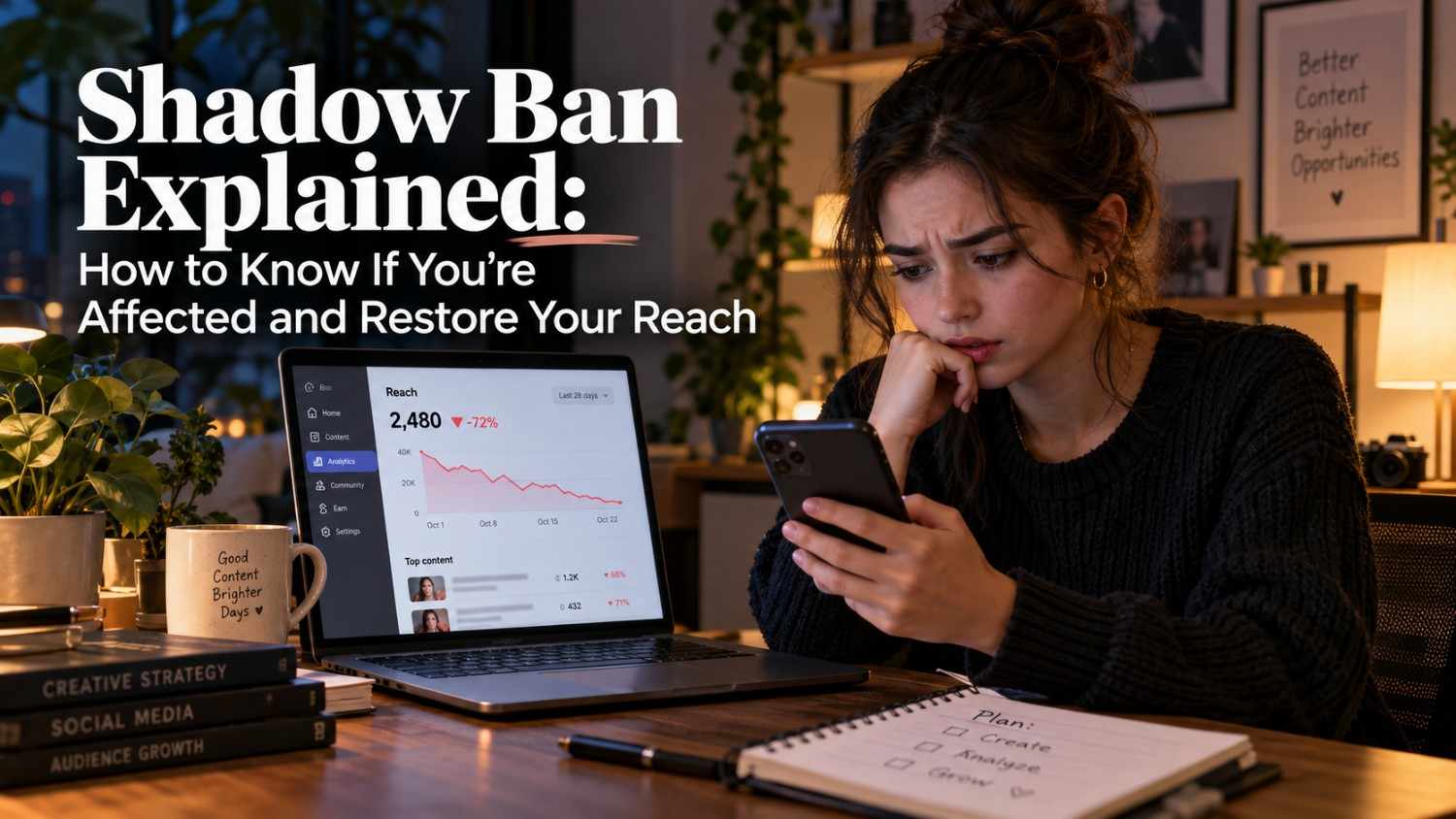
A shadow ban is an unofficial restriction where the platform quietly reduces how far your content travels, without telling you it happened. Your existing followers still see your posts, but Explore pages, hashtag pages and For You pages stop showing your content to anyone new.
Quick version: check your reach analytics first. A drop of 50 percent or more overnight, with no obvious explanation, is the clearest sign. From there, remove any flagged hashtags, cut out spammy or automated behaviour, and post original content for a couple of weeks to recover. Neither Instagram nor TikTok officially admits shadow banning exists, but the pattern is well documented enough that treating it as real and recoverable is the practical move.
Introduction
There is a specific kind of confusion that hits when your numbers drop for no reason you can point to. You did not change anything. You did not get a warning. You just posted like always, and suddenly barely anyone new is seeing it. That confusion has a name now, even if the platforms themselves will not use it officially.
This guide walks through what a shadow ban actually is, how to check for one on Instagram and TikTok specifically, the behaviours that tend to trigger one, and a clear recovery path for each platform. It also covers how long these restrictions usually last and what platforms officially say about them, so you are not just guessing based on rumours from a forum thread.
What Is a Shadow Ban and How Does It Work?
A shadow ban is an unofficial restriction on how far your content is allowed to spread. Here is the mechanism behind it.
The platform’s algorithm quietly reduces your content’s distribution without ever notifying you directly. Your content still exists, your account still functions normally, but it stops being shown to people who do not already follow you.
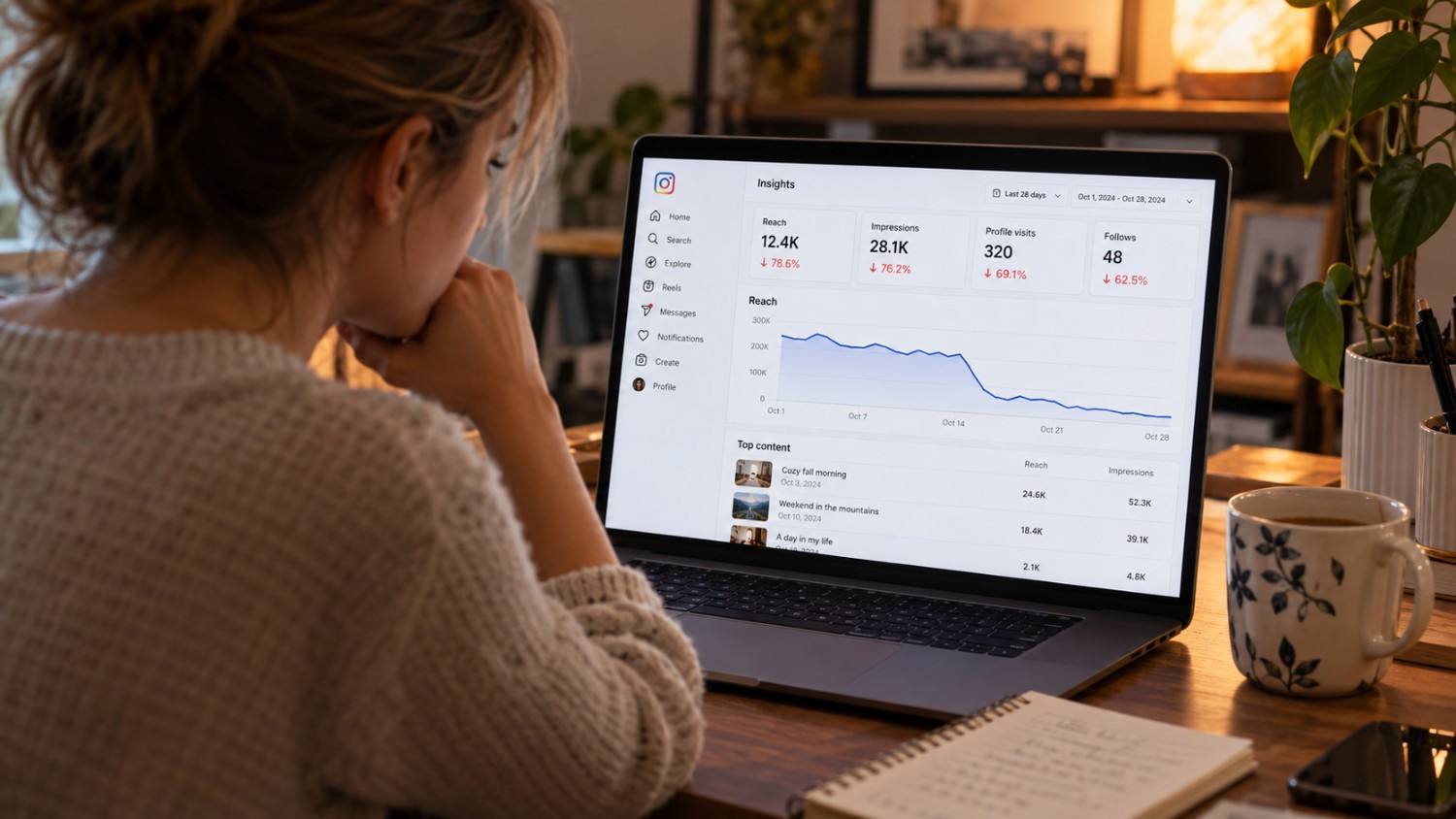
The effect is specific. Your posts stop showing up on Explore pages, in hashtag searches or on For You pages. Your existing followers keep seeing your content in their feed as usual, but your reach among new audiences drops sharply, sometimes overnight.
The purpose, as far as anyone outside these companies can tell, is to discourage spam, policy violations and low quality content without going as far as suspending or banning the account outright. It is a quieter form of moderation, and that quietness is exactly what makes it so frustrating to deal with.
The one thing worth remembering throughout this guide is that neither platform covered here officially acknowledges shadow bans. They are algorithmic restrictions, not a formal action you get a notice about, which is precisely why detecting one takes some digging.
How to Tell If You Are Shadow Banned on Instagram
Instagram will not tell you directly if you have been shadow banned. Here is how to check for the signs yourself.
Reach and Hashtag Checks
Start with your reach analytics. If your average reach drops 50 percent or more overnight, with nothing in your posting habits or content that explains it, that is the strongest single signal something has changed.
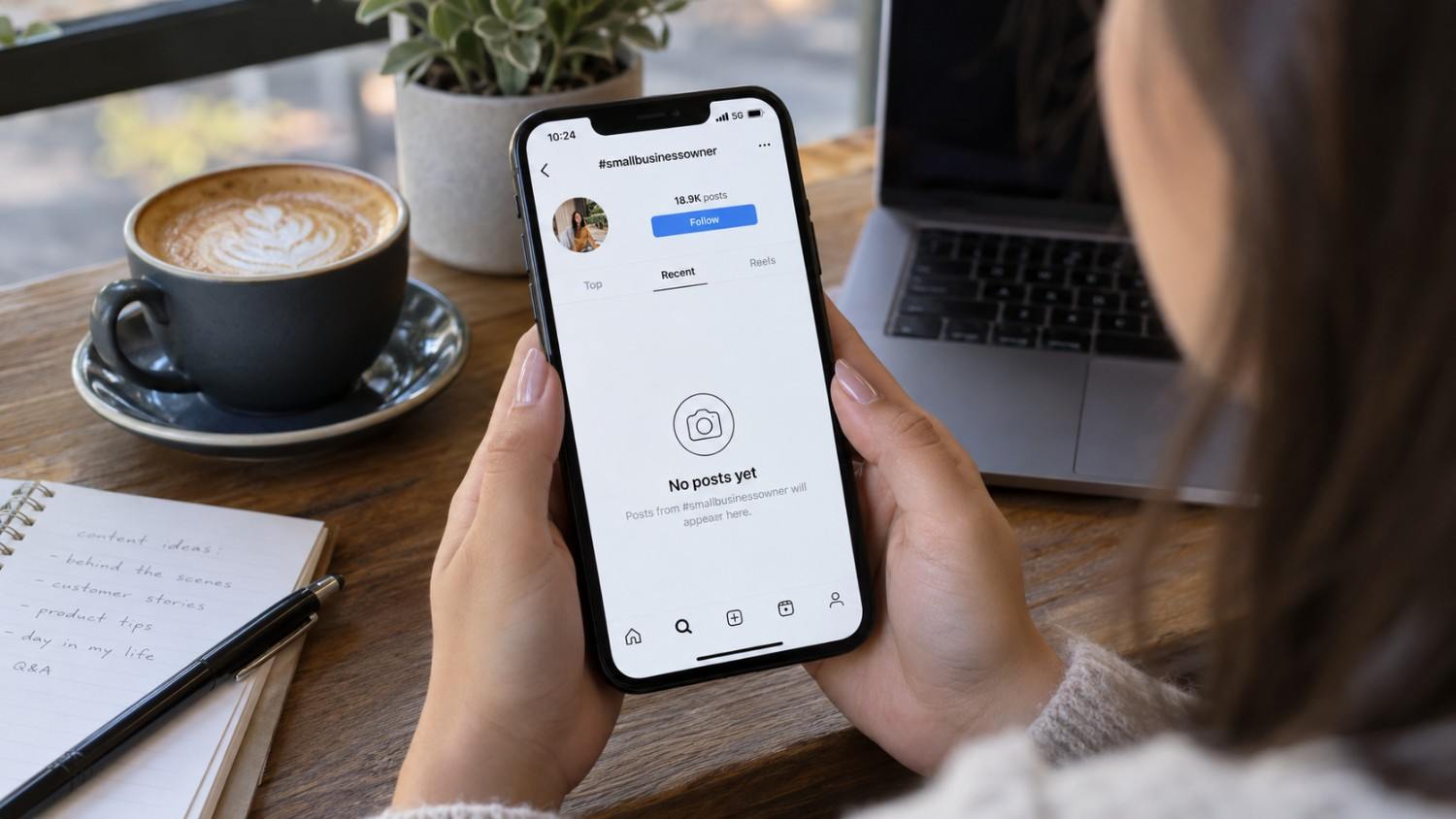
Next, check whether your posts appear in hashtag searches at all. Search one of your own hashtags from an account that does not follow you, or ask someone else to do it. If your recent post is nowhere to be found, that is a second signal worth taking seriously.
Explore Page and Outside Verification
Check whether your content shows up on the Explore page at all. If nothing you post recently appears there, your distribution outside your existing audience is limited.
The most reliable check is still asking someone who does not follow you to search for your content directly. If a stranger cannot find a post you know is public and recent, you are very likely dealing with a shadow ban rather than a coincidence.
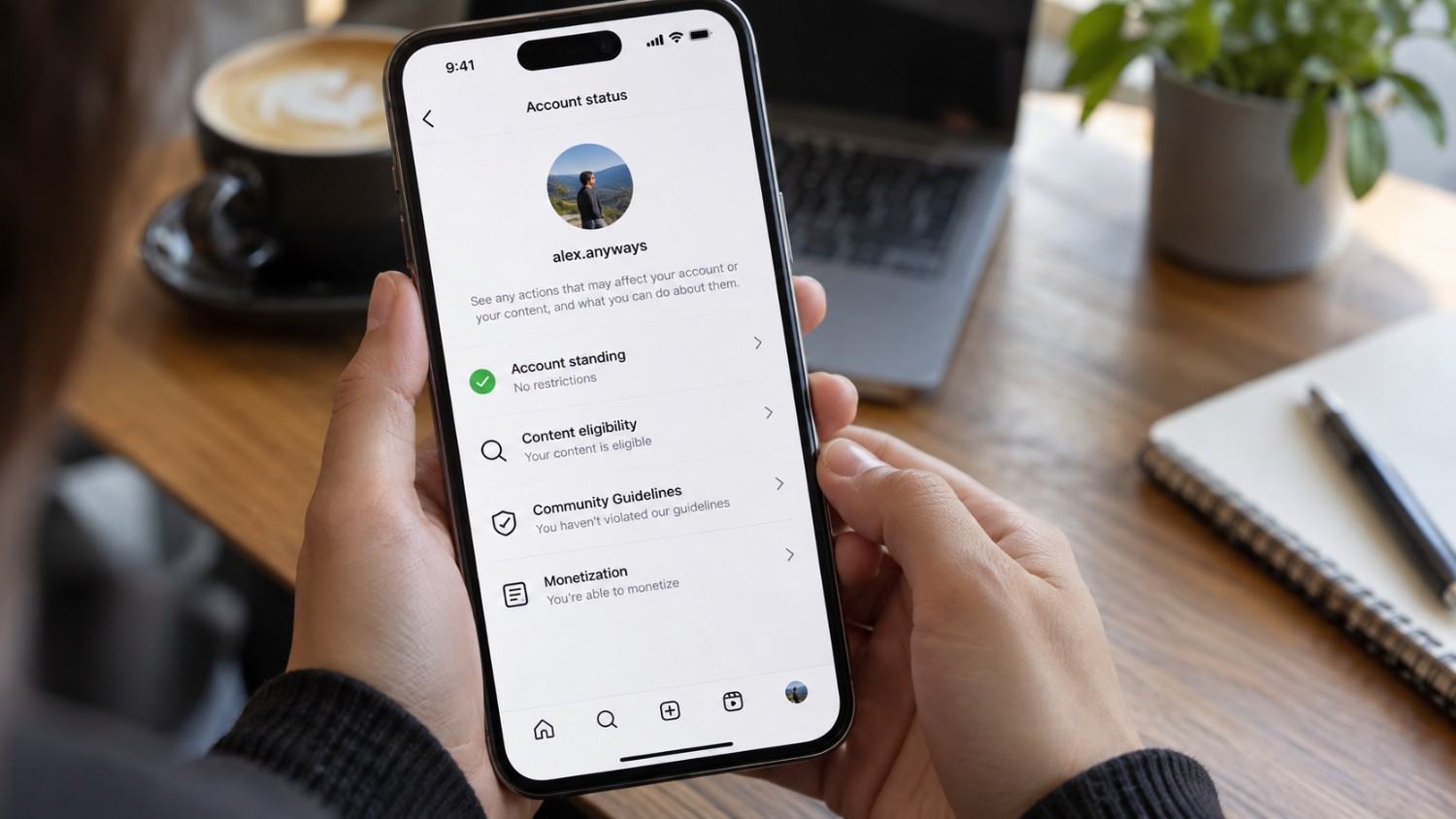
Instagram also has a built in feature for this. Under Settings, then Account, then Account Status, you can see whether your content is currently marked as eligible for recommendation. This is the closest thing to an official diagnostic tool the platform offers, and it is worth checking before assuming the worst.

How to Tell If You Are Shadow Banned on TikTok
TikTok’s version of a shadow ban works a little differently, and the signs to watch for are not identical to Instagram’s.
Reach and View Patterns
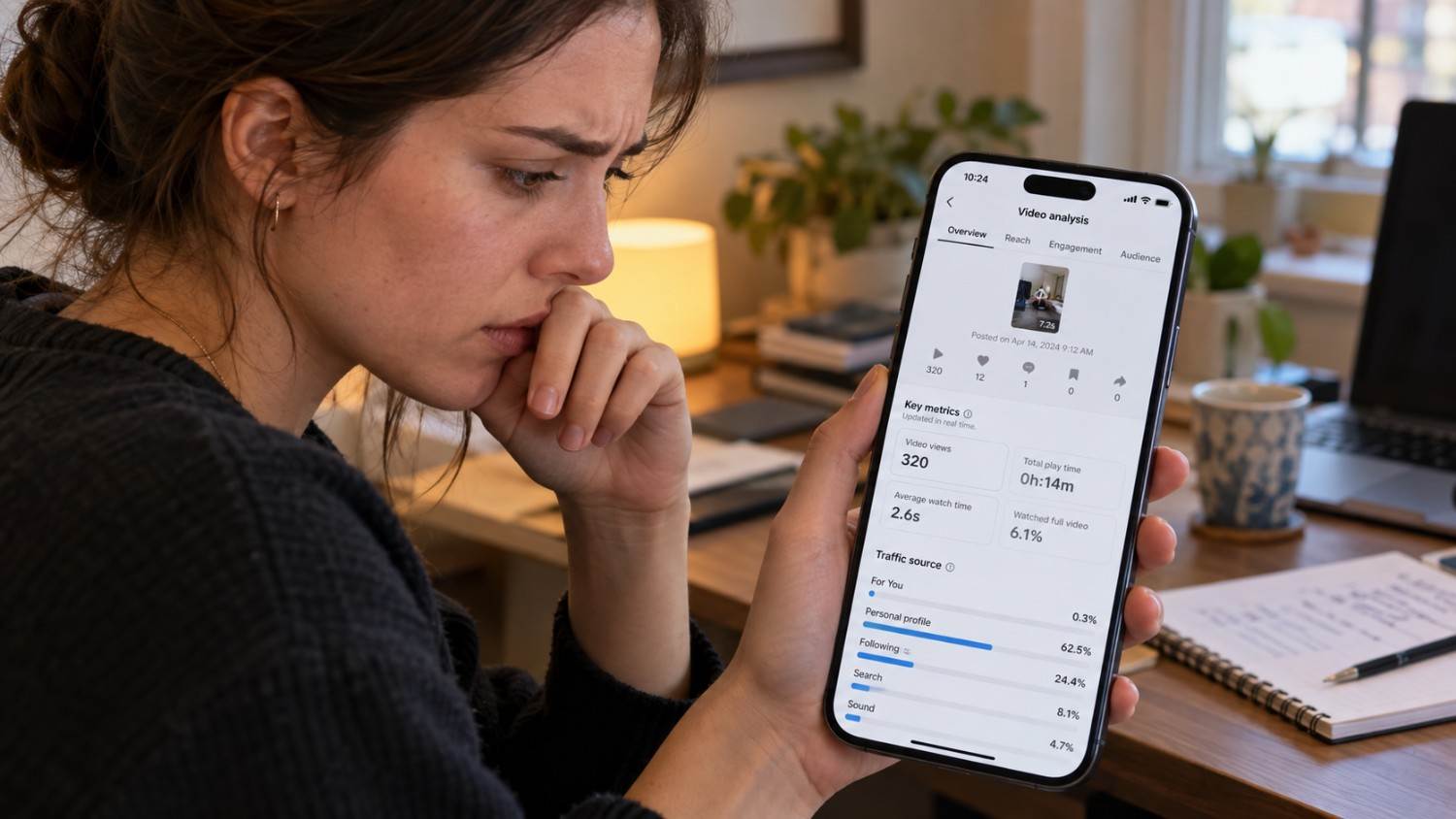
Check whether your videos are still appearing on the For You page for people who do not follow you. If your content used to show up there regularly and suddenly stops, that is the clearest indicator on this platform.
Pay attention to view count patterns too. A healthy video usually keeps climbing steadily for a while after posting. If views stop cold after the first few minutes instead of continuing to grow, something is limiting its spread.
Analytics and Notification Checks
Open Creator Tools, then Analytics, then Content, and look specifically at your For You reach percentage. If that number reads at or near zero across several recent posts, a shadow ban is a reasonable explanation.
Also watch your notifications. Frequent messages saying a video is “under review” or “didn’t pass review” can be an early warning sign that a broader restriction is coming, even before your reach actually drops.
Unlike Instagram, TikTok does not offer an official shadow ban checker of any kind. Monitoring your own analytics over time is really the only reliable method available.\
https://youtu.be/yJIlyqCsgfo?si=zmswaJOFb2BDdANg
Common Reasons Accounts Get Shadow Banned
Shadow bans do not happen randomly. A handful of specific behaviors tend to trigger them across both platforms.
Spammy behavior is the most common cause, and it covers posting too frequently in a short window, liking content too fast to be human, or following and unfollowing accounts rapidly in a pattern that looks automated.
Banned hashtags are another frequent trigger. Platforms periodically flag hashtags that have been overrun with spam or policy violations, and using one, even without realizing it is flagged, can limit your reach.
Content violations, meaning posts that break community guidelines directly, are an obvious cause, though sometimes the violation is unintentional, such as background music or a screenshot that includes something the platform restricts.
Reposting content from other platforms with a visible watermark, particularly from TikTok reposted elsewhere, is specifically penalized, since platforms want to promote native content rather than recycled clips.
Using automation, whether bots or third party tools that handle likes, comments or follows on your behalf, is treated as a red flag by most detection systems.
Running multiple accounts from the same device or the same IP address can also trigger restrictions, since that pattern resembles the kind of behavior spam networks use.
The underlying theme across nearly all of these is the same: most shadow bans are triggered by behavior that looks automated or spammy, rather than by the actual quality of your content. Staying recognizably human in how you use the platform goes a long way toward avoiding one entirely.
Does Instagram Actually Shadow Ban Accounts in 2026?
Instagram’s official position is that they do not shadow ban anyone. The evidence from creators tells a more complicated story.
What Instagram says publicly is that they do not hide your content from people who already follow you. They do, however, acknowledge having content recommendation guidelines that affect how widely a post gets distributed beyond your existing audience, which is functionally very close to what people describe as a shadow ban, even without using that word.
What creators actually experience is sudden reach drops, exclusion from hashtag pages, and posts disappearing from the Explore page, all without any explanation or notification from the platform.
The honest reality sits somewhere in between the two. Instagram runs an algorithmic distribution system that absolutely can and does limit how visible a piece of content becomes. Whether that technically counts as a shadow ban, by whatever strict definition someone wants to use, is genuinely debated.
The practical takeaway is that the terminology argument does not matter much if your reach has dropped. Whatever you call it, the fix is the same, so it’s more useful to focus on recovery than on winning a semantic argument about what Instagram will admit.
Does TikTok Shadow Ban Accounts in 2026?
TikTok takes the same official stance as Instagram, and the pattern of evidence looks similar too.
What TikTok says is that they do not suppress content based on who a creator is or what viewpoints they hold. They do acknowledge that content quality plays a role in distribution, which again leaves room for a great deal of interpretation.
What creators experience includes sudden drops in For You page reach, view counts that plateau far earlier than usual, and in some cases geographic restrictions that limit which regions a video is shown in, none of which come with an explanation.
The reality is that TikTok’s algorithm absolutely can limit distribution for a wide range of reasons, some clearly stated in their guidelines and others that remain opaque even to people who study the platform closely. Whether this meets a strict definition of shadow banning is, again, up for debate.
As with Instagram, the more useful approach is to stop worrying about the exact label and focus instead on creating quality content and following the platform’s stated guidelines as closely as you can.
How Long Does a Shadow Ban Usually Last?
Duration varies quite a bit depending on the platform and the severity of whatever triggered the restriction in the first place.
On Instagram, minor violations tend to resolve within 7 to 14 days. More serious violations can extend past 30 days, and in rare cases, accounts report restrictions that seem to last indefinitely without a clear cause or resolution.
On TikTok, the timeline tends to move faster for smaller issues, with minor violations often resolving within 24 to 72 hours. Moderate violations run closer to 7 to 14 days, and serious ones can stretch past 30 days, similar to Instagram’s upper range.
The general pattern holds across both platforms: the severity of whatever triggered the restriction determines how long it lasts. Minor, likely accidental issues tend to clear up fast. Repeated or serious violations take considerably longer.
The most useful mindset here is not to panic. Most shadow bans are temporary, and the right response is a set of specific corrective actions rather than anxious waiting.
How to Fix an Instagram Shadow Ban
Recovering from an Instagram shadow ban follows a fairly specific sequence, and skipping steps tends to slow the process down.
Step 1: Stop posting entirely for 24 to 48 hours. This gives the algorithm a clean window to reset rather than continuing to react to whatever triggered the restriction in the first place.
Step 2: Go back through your recent posts and remove any hashtags that might be flagged or that read as spammy, even if you were not aware they were a problem when you used them.
Step 3: Review your content honestly for anything that might violate community guidelines, even unintentionally, and remove it if you find it.
Step 4: Check your Account Status under Settings, then Account, then Account Status, and address anything flagged there directly.
Step 5: Once you resume posting, focus on original, high quality content for the next one to two weeks rather than reposts or recycled material.
Step 6: Engage with your community naturally during this period. Real comments, real likes, real replies, nothing automated or rushed.
The most important thing across all six steps is to be patient and consistent. Most Instagram shadow bans resolve within two to four weeks if you follow these steps properly.
How to Fix a TikTok Shadow Ban
TikTok recovery follows a similar spirit but a slightly different set of steps.
Step 1: Delete any videos that seem likely to have triggered the restriction in the first place, even if you are not entirely certain which one caused it.
Step 2: Go through your remaining videos and remove any hashtags that may be flagged or banned.
Step 3: Stop posting for 48 to 72 hours to give the algorithm room to reset.
Step 4: Once you resume, create original, high-quality videos for one to two weeks, avoiding reposted or watermarked content entirely during this window.
Step 5: Engage with your community authentically, commenting and interacting the way you normally would rather than trying to force engagement artificially.
Step 6: If the issue persists, go to Settings, then Help, then Report a problem, and explain the situation directly to TikTok’s support channel.
The fastest path to recovery on TikTok specifically tends to be a combination of original content and genuinely authentic engagement, rather than any single trick or workaround.
How Hashtag Misuse Can Reduce Reach
Hashtags are one of the most common and most overlooked causes of reduced reach. Here is how the problem usually shows up.
Some hashtags are flagged for violating community guidelines, often because they were overrun with spam or inappropriate content at some point, even if the hashtag itself sounds completely innocent. Using one of these limits your distribution without any warning that the hashtag was a problem.
Irrelevant hashtags cause a different kind of issue. Tagging a fitness post with unrelated trending hashtags confuses the algorithm about what your content actually is, which can hurt how it gets categorized and shown.
Overuse is its own problem. Piling on twenty or thirty hashtags reads as spammy behavior to most platforms now, and Instagram specifically recommends using somewhere around three to five relevant hashtags per post rather than maxing out the allowed limit.
The fix is straightforward: research a hashtag before you use it regularly. Check that it is active, matches your content honestly, and has not developed a spam reputation.
https://youtu.be/vnB21pThTKI?si=jhWZhlzWZ7_PZnvp
Spammy Automation and Repetitive Actions to Avoid
Automation is one of the fastest routes to a shadow ban, because it produces behaviour patterns that look almost nothing like how a real person uses an app.
Bots used for likes, comments or follows leave a clear signature in usage data, since they act faster and more consistently than any human would.
Third-party automation tools that handle engagement actions on your behalf fall into the same category, even when they are marketed as safe or undetectable.
Repetitive actions, such as liking or following accounts in rapid succession, resemble spam network behaviour closely enough to trigger algorithmic suspicion on their own.
Copying and pasting comments, the same message posted across many different accounts or posts, are an easy pattern for platforms to detect and penalize.
The fix here is simple to state even if it takes more effort: do everything manually. Real engagement takes longer than automated engagement, but it is the version that does not put your reach at risk.
Community Guideline Violations That Can Limit Distribution
Beyond spam and automation, actual guideline violations remain one of the most direct causes of reduced distribution.
Hate speech, meaning content that promotes hatred or discrimination against a group, is treated seriously across every major platform and tends to trigger restrictions quickly.
Harassment, content that targets or attacks specific individuals, is handled similarly, even when the intent behind it was not malicious.
Violence, meaning content that depicts or promotes violent acts, is restricted broadly, often with less room for context or nuance than creators expect.
Explicit sexual content violates most platforms’ guidelines outright, regardless of the account’s overall content history.
Misinformation, false or misleading claims presented as fact, has become an increasingly common trigger as platforms have tightened enforcement in this area.
The best approach is to read the community guidelines for whichever platform you post on most, rather than assuming you already know them. When you are genuinely unsure whether something crosses a line, the safer move is simply not to post it.
How to Check Account Status and Content Eligibility
Both major platforms offer some way to check your current standing, though neither makes it especially prominent in the app.
On Instagram, go to Settings, then Account, then Account Status. This section shows whether your content is currently eligible for recommendation to people who do not follow you, along with any flags or issues the platform has noted on your account.
On TikTok, go to Creator Tools, then Analytics, then Content, and check your For You reach percentage directly. There is no dedicated account status page the way Instagram has one, so this analytics check is the closest equivalent available.
Checking these regularly, rather than only after you notice a problem, means you are more likely to catch an issue early and address it before it compounds into a longer restriction.
What to Do After a Sudden Drop in Reach
A sudden reach drop deserves a calm, methodical response rather than a panicked one. Here is the sequence worth following.
Step 1: Do not panic. Reach drops happen for a wide range of reasons, and not every drop means a shadow ban specifically, so give yourself room to investigate before assuming the worst.
Step 2: Check for the shadow ban indicators covered earlier in this guide, reviewing your analytics and account status directly rather than guessing.
Step 3: Review your recent content honestly, looking for anything that might have triggered the issue, whether a hashtag, a piece of content or a pattern of posting.
Step 4: Pause posting for 24 to 48 hours to give the algorithm space to reset, rather than continuing to post through the confusion.
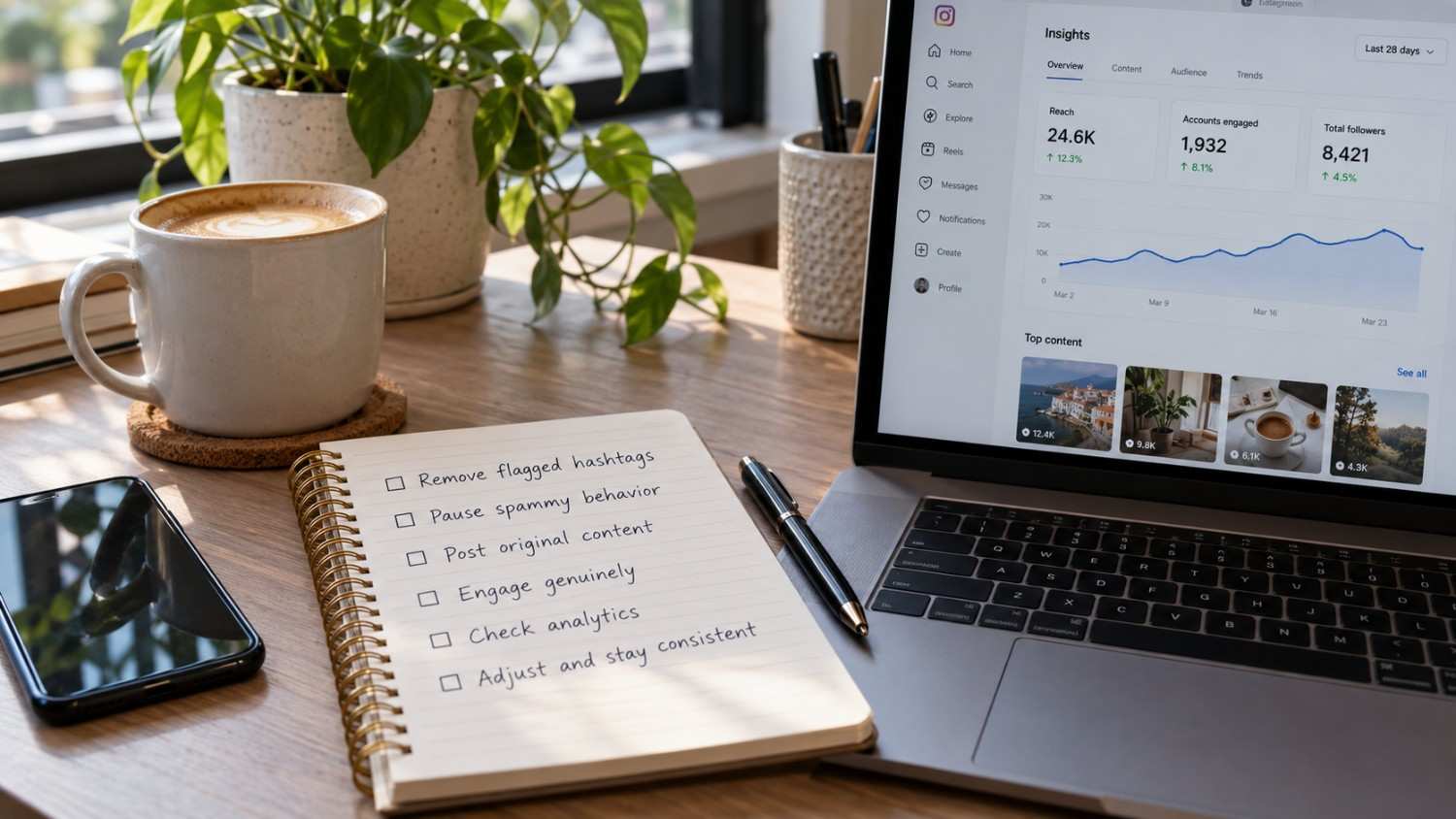
Step 5: Once you resume, focus on original, high quality content for one to two weeks, prioritizing genuine value over volume.
Step 6: Engage authentically with your community throughout this period, since real interaction is what tends to rebuild trust with the algorithm fastest.
Spotting the Drop Sooner
The steps above only work if you actually notice the drop early, and that is harder than it sounds when your analytics live scattered across several different apps that you check on different schedules.
Social by InstantDM is a scheduling and analytics tool, not a shadow ban detector, so it is worth being precise about what it actually offers here. Its analytics module tracks reach, impressions, engagement and follower growth per post across every platform you connect, in one dashboard rather than five separate ones. That does not diagnose a shadow ban specifically, but it does mean a reach drop on any platform is visible in the same place you already check regularly, which makes it far more likely you catch the pattern early rather than weeks later when you happen to notice engagement feels quiet. You can see how it works at https://socialbyidm.com.
Shadow Ban Detection: Instagram vs TikTok
| Factor | TikTok | |
|---|---|---|
| Official acknowledgment | Denies shadow banning | Denies shadow banning |
| Detection method | Account Status feature | Analytics check |
| Typical duration | 7 to 30 days | 24 hours to 14 days |
| Common causes | Hashtag misuse, spam | Watermarks, automation |
| Recovery time | 2 to 4 weeks | 1 to 2 weeks |
| Prevention | Follow guidelines | Original content |
The Bottom Line
Shadow bans are real, even if platforms will not use that exact word, and they are recoverable. They are unofficial restrictions that quietly reduce your content’s reach without any direct notification, which is exactly what makes them so disorienting when they happen.
The key actions worth repeating: check your analytics regularly rather than only when something feels off, follow community guidelines closely, use relevant and active hashtags, post original content and engage authentically with your community.
Start monitoring today. Check your analytics, follow the guidelines, create quality content and give the process time to work. That is genuinely how shadow ban recovery works, and it holds true regardless of which platform you are dealing with.
For your reference:
https://buffer.com/social-media-terms/shadow-banned
https://www.kontentino.com/blog/shadow-ban-what-it-is-and-how-to-prevent-fix-it/
Frequently asked questions
What is a shadow ban on Instagram or TikTok?
A shadow ban is an unofficial restriction that reduces your content's reach without notifying you. Your posts stop appearing on Explore pages, hashtags and For You pages, though existing followers can still see your content normally.
How do I know if I'm shadow banned?
Check your reach analytics first. A drop of 50 percent or more overnight, with no clear explanation, is the strongest sign. Also check whether your content appears in hashtag searches or on the Explore page.
How long does a shadow ban last?
Typically 7 to 30 days depending on severity, with minor violations resolving faster and serious ones taking longer. Most shadow bans are temporary rather than permanent.
How do I fix a shadow ban?
Stop posting for 24 to 48 hours, remove flagged hashtags and content, then post original, high quality material while engaging authentically. Check your account status for any specific issues flagged.
Can I prevent a shadow ban?
Yes, largely by following community guidelines, using relevant hashtags rather than banned or irrelevant ones, avoiding automated engagement tools, and posting original content with genuine interaction.