50 Evergreen Content Ideas You Can Repost Forever in 2026
50 evergreen content ideas you can repost forever. Save this list and never run out of social media content again.
TL;DR
Evergreen content is content that stays relevant no matter when people see it. It does not expire. It does not become outdated. You can repost it every month, every quarter, or every year and it still delivers value.
Fifty evergreen content ideas were collected that work across every niche. These are not trending topics that fade within a week. These are timeless ideas that build an audience steadily over months and years.
Quick answer: a scheduler such as Social by InstantDM helps you schedule and recycle these evergreen ideas across platforms. The AI generates fresh captions and hashtags each time you repost, so your content never feels repetitive to your audience.
Bottom line: if you are tired of scrambling for content ideas every week, this framework is the fix. Save it, bookmark it, and use it indefinitely.
Introduction
Most content calendars collapse for the same reason. Someone runs out of fresh ideas around week six, panics, and starts posting whatever feels urgent instead of what actually serves the audience. Evergreen content breaks that cycle, since it is built to stay useful regardless of when someone stumbles across it, and can be reposted and reformatted far longer than a trending topic ever could.
This guide covers the system behind evergreen content, how to repurpose one piece into dozens of platform-specific posts, and the tools that make that process genuinely faster. Whether you are a solo creator or a small team splitting up the workload, the framework below turns one good idea into weeks, sometimes months, of usable content.
Best Content Repurposing Ideas to Get More Reach in 2026
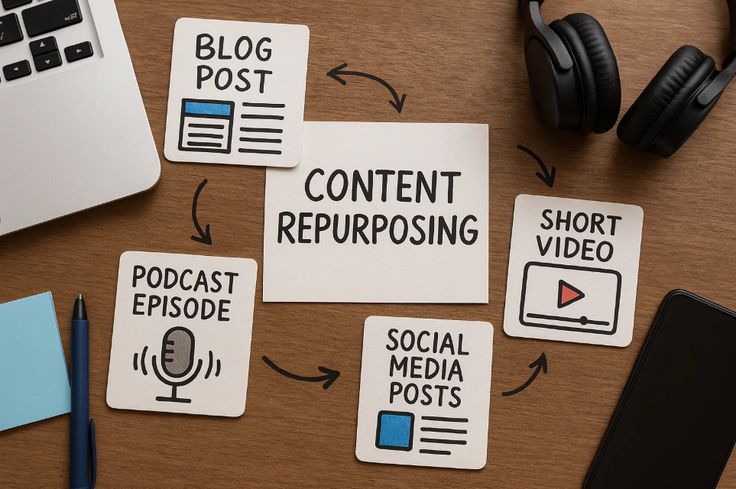
Evergreen content becomes genuinely powerful once you start repurposing it. One idea can become a blog post, a Reel, a carousel, a tweet, and a LinkedIn article, five distinct pieces pulled from a single original idea.
Here is how repurposing actually works in 2026.
Take a blog post: turn the key points into an Instagram carousel, the introduction into a tweet thread, the conclusion into a LinkedIn article, and film a sixty second Reel summarizing the main idea.
Take a podcast episode: clip the best thirty second moments for Reels and TikToks, write a blog post summarizing the key insights, create quote graphics for Instagram, and share key takeaways on X.
Take a video: extract the audio for a podcast clip, pull quotes for social posts, create a blog post with the transcript, and design infographics from key data points.
The key insight is that evergreen content is infinitely repurposable. One idea can fuel your content calendar for months if you are willing to reformat it across platforms rather than posting it once and moving on.
A scheduler like Social by InstantDM helps with repurposing content across platforms in practice. You create one piece and it adapts for Instagram, TikTok, Facebook, LinkedIn, and X, with the AI generating platform specific captions and hashtags for each.
Why repurposing multiplies your effective output
It is easy to underestimate just how much leverage a single well made piece of content actually has. Creating something original takes real time, research, and thought. Reformatting that same idea into a different shape takes a fraction of that effort, since the hard thinking is already done. A creator who treats every post as a one time event is doing several times more original work than one who treats each idea as raw material for five or six formats.
How to Turn One Blog Post Into Multiple Social Media Posts
This is the most efficient repurposing strategy available.
Step 1: Identify five to seven key points from your blog post, each becoming a separate social post.
Step 2: create an Instagram carousel, one key point per slide, with a hook on the first slide and a call to action on the last.
Step 3: write a tweet thread, summarizing each key point in a single tweet, then linking to the full blog post at the end.
Step 4: create a LinkedIn article, expanding on one key point with your own personal experience and insights.
Step 5: film a Reel summarizing the entire blog post in about sixty seconds.
Step 6: design quote graphics, pulling the most impactful sentences into simple, shareable visuals.
Step 7: schedule everything across platforms over two to three weeks rather than dumping it all out at once.
One blog post becomes ten or more social media posts through this process, the actual power of repurposing done deliberately rather than as an afterthought.
How to Repurpose Long-Form Content Into Reels, Shorts & Carousels
Long form content is genuinely gold for short form repurposing, containing far more raw material than most creators realize.
From blog posts: pull a surprising statistic into a Reel with text overlay, extract a step by step process into a carousel with one step per slide, or turn a counterintuitive statement into a talking head Reel.
From podcasts: clip the most engaging thirty seconds into a Reel or TikTok, pull a quotable moment into a text based video, or extract a tip or hack into a quick tutorial Reel.
From YouTube videos: cut the best sixty seconds into a Short or Reel, pull key takeaways into a carousel infographic, or turn a behind the scenes moment into a Story.
The formula is straightforward: start with long form, identify the hook, reformat for short form, add platform elements, then publish.
This works well for scheduling these repurposed pieces across platforms once they are ready. You can create a week of Reels, Shorts, and carousels from one long form piece and schedule all of it in a single sitting.
Picking the right hook before you start repurposing
The single biggest factor in whether a repurposed clip performs is the hook, not production quality. A polished Reel with a boring opening line will underperform a rough, phone shot clip that opens with something genuinely surprising. Before cutting anything, scan the source material for the moment that would make someone stop scrolling, and build the piece around that rather than grabbing the first sixty seconds chronologically.
Best Ways to Repurpose Podcasts and Videos Into Social Content
Podcasts and videos are genuine content goldmines. Most creators publish them once and move on, which is a mistake given how much value is sitting unused inside a single episode.
Podcast repurposing: clip the best moments for Reels and TikToks, write a blog post summarizing the episode, create quote graphics from key insights, share timestamps on X, and turn the transcript into a LinkedIn article.
Video repurposing: extract the audio for a podcast clip, pull quotes for social graphics, create a blog post with the transcript, design infographics from data shared, and clip the best moments for Shorts and Reels.
The key idea here is simple: do not let your long form content live on a single platform. Extract every piece of value it contains and distribute it everywhere your audience actually spends time.
How to Repurpose Evergreen Content Without Repeating Yourself
This is the real challenge with evergreen content. You want to repost it, but you do not want your audience seeing the exact same thing twice and tuning out.
Here is how to keep it feeling fresh each time.
Change the format. If you shared a tip as a text post last month, share it as a Reel this month. Same underlying idea, different format entirely.
Update the visuals. Use different images, colors, or design styles. The content stays the same, but it looks noticeably different to anyone scrolling past.
Add new context. If you shared a tip back in January, add something like here is a tip that has helped hundreds of our followers this year when you repost it in June.
Rotate your hooks. The same tip can carry several different hooks. Most people do not know this versus the biggest mistake I see is versus here is what changed everything for me, all leading into the same core idea.
Use different platforms. Share the same idea on Instagram this month, LinkedIn next month, and TikTok the month after that. Different audiences seeing it for the first time, same underlying value delivered.
A scheduler like Social by InstantDM generates fresh captions and hashtags each time you repost, adapting the wording for each platform so your content never feels repetitive even when the core message stays consistent.
How much change is actually enough
A common worry is wondering how different a repost needs to be before it stops feeling recycled. In practice, changing just two of the five levers above, format and hook, is usually enough to make it feel genuinely new, since few people remember the exact wording of something they saw months earlier. The goal is not to disguise it is the same idea, just to avoid a lazy copy paste feel.

Content Repurposing Workflow for Creators, Brands & Small Teams
Here is a workflow that genuinely works.
Monday: create one long form piece, whether that is a blog post, a podcast episode, or a video.
Tuesday: extract five to seven key points from that long form piece.
Wednesday: create short form content from those key points, covering Reels, carousels, and tweets.
Thursday: schedule everything across platforms for the next two weeks.
Friday: engage with comments and responses coming in from the week’s content.
The key is batching your content creation. Do not create one piece at a time throughout the week. Create a week’s worth of material in a single focused session.
For small teams, assign clear roles. One person creates the long form content. Another person extracts the key points. Another person builds the short form content. Another person handles scheduling and publishing.
A scheduler such as Social by InstantDM supports team workflows well, letting multiple team members create, approve, and schedule content together while the AI generates captions and hashtags tailored for each platform.
Why batching beats daily content creation
Batching works better than daily creation for a reason that has less to do with time management and more to do with mental context switching. Writing a caption, then editing a video, then replying to comments, all within the same hour, tends to produce weaker work than dedicating a full block to each task type. A session focused only on captions, followed by one focused only on editing, consistently produces better output than doing everything at once each day.
Best AI Tools for Repurposing Content Faster
AI tools have genuinely transformed content repurposing in 2026, cutting down the most tedious parts of the process.
ChatGPT and Claude help extract key points from long form content. You paste in your blog post and ask for five to seven social media post ideas drawn directly from it.
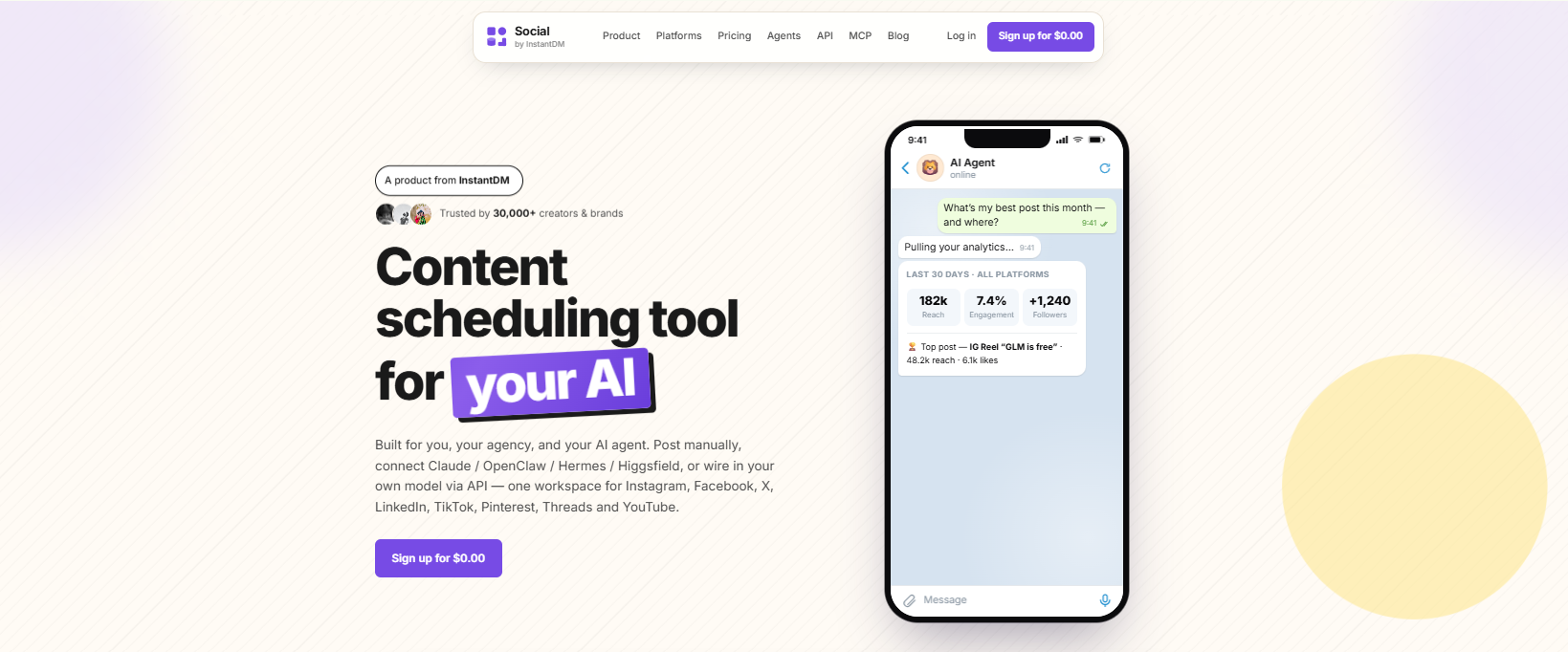
Social by InstantDM generates platform specific captions and hashtags. You write one post and it adapts automatically for Instagram, TikTok, Facebook, LinkedIn, and X.
Canva’s AI features help you create visuals quickly. You describe what you want and it generates design concepts you can refine from there.
CapCut’s AI features help you edit videos faster, with auto captions, smart cuts, and template suggestions that speed up the editing process considerably.
Descript helps you repurpose podcasts and videos specifically. It transcribes your content, identifies key moments, and helps you pull clips without manually scrubbing through hours of footage.
The key insight is that AI does not replace your creativity here. It handles the tedious parts, extracting key points, generating captions, and creating first pass visuals, so you can focus your energy on strategy and the parts that genuinely need a human touch.

How to Adapt the Same Content for Instagram, LinkedIn, TikTok & X
Each platform has genuinely different requirements, so here is how to adapt the same underlying content for each one.
Instagram is visual first, so use high quality images and videos. Captions matter, so write engaging captions with a real hook. Use three to five targeted hashtags. Reels tend to be the best performing format. Carousels work well for educational content in slide format.
LinkedIn rewards a more professional tone, so write thought leadership content. Long form works well, with articles and detailed posts performing solidly. Personal stories land well, so share your own experience. Use three to five professional hashtags. Ask questions to drive comments.
TikTok wants raw and authentic content, so do not over produce it. Hook viewers within the first two seconds or you lose them. Trends matter, so use trending sounds where they fit naturally. Educational content, quick tips and hacks, tends to perform particularly well. Aim for one to two posts per day if you can sustain it.
X rewards concise writing, so make your point quickly. Threads work well for breaking complex ideas into digestible pieces. Visuals tend to increase engagement noticeably. Use one to two relevant hashtags at most. Reply to comments and join the surrounding conversation rather than just broadcasting.
The same underlying idea can genuinely work across all four platforms. You are simply reformatting it for each one’s specific culture and expectations.
Why platform-native format matters more than the message itself
A message that sounds smart on LinkedIn can sound stiff on TikTok, even if the underlying insight is identical. This is less about the content being wrong and more about tone mismatching the platform’s native register. Reading a caption out loud in the voice of a typical user on that platform is a quick way to catch when something still sounds copied over rather than genuinely adapted.
Common Content Repurposing Mistakes That Reduce Engagement
These mistakes quietly kill engagement more often than people realize.
Mistake 1: copy pasting the same text across platforms. Each platform has different audiences, so adapt your content rather than reusing it verbatim.
Mistake 2: reposting too frequently. If you repost the exact same content every week, your audience will notice and tune it out. Space reposts out.
Mistake 3: not updating old content. Evergreen does not mean static, so update statistics, examples, and visuals regularly.
Mistake 4: ignoring platform specific features. Instagram Reels, TikTok sounds, LinkedIn articles, each has unique features worth using.
Mistake 5: not tracking performance. Repurposing without checking analytics is just guessing, so track what performs best and create more of it.
Mistake 6: forgetting the call to action. Every repurposed piece should drive some action, a follow, a subscribe, a visit, or booking a call.
Mistake 7: not engaging with responses. When someone comments on repurposed content, respond, since engagement tends to drive more engagement.
A scheduler such as Social by InstantDM helps avoid several of these mistakes at once. The AI adapts content for each platform automatically, the analytics show which repurposed content performs best, and the scheduling helps ensure consistent posting without tipping into over reposting.
How to audit your last month of reposts
A useful exercise, especially if engagement has started slipping, is pulling up your last month of posts and checking how many were genuinely reformatted versus simply copy pasted. It is common to find a handful of pieces account for most of the repetition problem, which makes the fix more targeted than a full strategy overhaul. Fixing three or four repeat offenders is usually enough to notice a difference within a couple of weeks.

How to Build a Weekly Content Repurposing System
Here is the system that actually works.
Step 1: choose your anchor content, one blog post, podcast episode, or video per week.
Step 2: extract key points, identifying five to seven takeaways from that anchor content.
Step 3: create platform specific content, adapting each key point for Instagram, LinkedIn, TikTok, and X.
Step 4: schedule everything, using a scheduler to publish across platforms over the following two weeks.
Step 5: engage, responding to comments and messages throughout the week as they come in.
Step 6: analyze, checking which content performed best and adjusting the following week’s strategy accordingly.
Step 7: repeat. Consistency is genuinely the key ingredient behind long term growth here.
A scheduler such as Social by InstantDM can automate steps three through five here. The AI generates platform specific content, the scheduler publishes it across platforms, and the analytics show what is working, freeing you to focus mainly on creation and engagement.
The Bottom Line
Evergreen content is the most efficient content strategy available in 2026. One idea can fuel your content calendar for months, and repurposing multiplies that efficiency even further across every platform you post to.
The ideas in this guide are not just a list, they form a system. Pick one idea, create content around it, repurpose it for every platform, schedule it, track performance, and repeat the cycle.
A scheduler such as Social by InstantDM makes this system genuinely scalable. The AI generates fresh content from your evergreen ideas, the scheduler publishes across platforms, and the analytics show what works, letting you focus on what matters most, which is creating real value for your audience.
Start with one evergreen idea today. Repurpose it for three platforms. Schedule it for next week. Watch the engagement come in. Then do it again. That is genuinely how content compounds over time.