TikTok Algorithm 2026: How the For You Page Actually Ranks Videos
TikTok algorithm explained — watch time, shares, SEO, and how the For You Page ranks videos. 2026 signals and tips.
TL;DR:
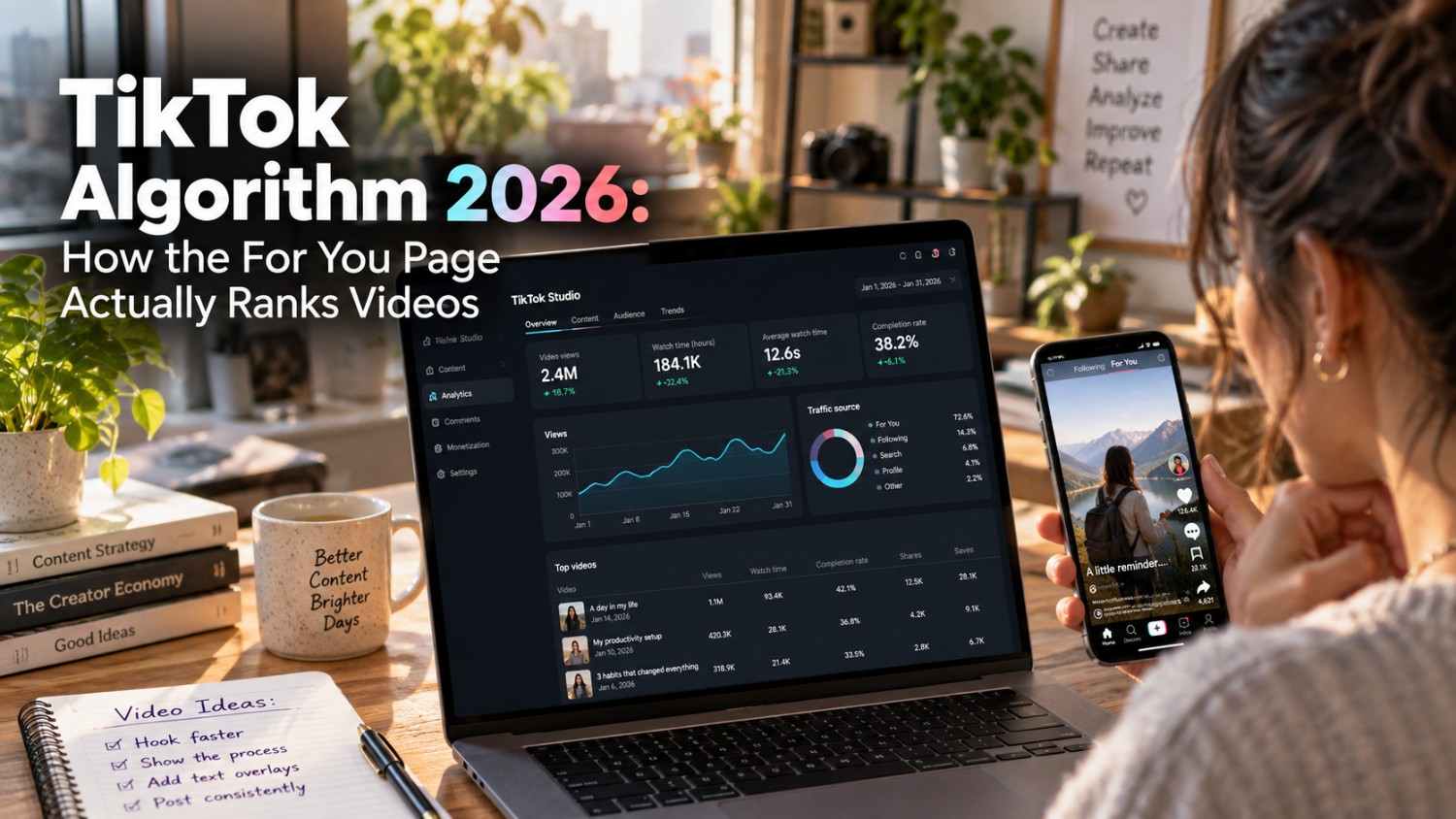
TikTok’s algorithm in 2026 runs on an interest graph rather than a social graph, which means it shows people what they’ll enjoy watching, not what their friends posted. Watch time and completion rate carry the most weight, somewhere around 40 to 50 percent of the ranking decision, and shares and saves now matter more than likes. Every video, no matter who posted it, starts in a small test pool of a few hundred viewers before the algorithm decides whether to push it further. Spoken words and on-screen text are now read for search value too, so captions and keywords do real work. This piece walks through every layer of that system and what it means for the videos you post next.
Introduction
Ask five creators how the TikTok algorithm works and you’ll usually get five different answers, most of them half right and a few years out of date. Part of the confusion comes from how often the system has actually changed, and part of it comes from creators mistaking a lucky video for a pattern.
What follows is a grounded look at how the For You Page decides what to show in 2026, built around the signals that consistently show up in testing and reporting: watch time, completion rate, shares, saves, and the way the platform now reads spoken words and on screen text almost like a search engine would. None of this guarantees a viral video. It does explain why some videos with a hundred followers outperform others with a hundred thousand, and that gap is worth understanding.

How the TikTok Algorithm Works in 2026
At its core, TikTok’s algorithm is a recommendation engine built around interest rather than social connection. It doesn’t ask who you follow before deciding what to show you. It asks what you’ve actually watched, rewatched, and engaged with, then looks for more of the same.
Four things feed that decision. There’s the interest graph itself, which maps what a viewer tends to enjoy regardless of who they follow, so a brand-new account with zero followers can absolutely go viral if the content resonates. There’s content analysis, where TikTok breaks down the visual elements, audio, text overlays, and caption of a video to understand what it’s actually about. There are user signals, meaning how people interact with a video once they see it, from watch time to shares to a simple double tap. And there’s personalization, since every single user’s For You Page is a unique feed shaped entirely by their own behaviour on the app.
The upshot is that TikTok’s algorithm rewards content, not accounts. That single distinction explains a lot of what feels strange about the platform compared to older, follower based feeds.
Why the Interest Graph Changes Everything for New Creators
On a follower based platform, a new account is essentially invisible until it builds an audience large enough to matter. TikTok flips that. Because distribution is based on interest signals rather than existing reach, a first video from a brand new account gets tested against the same pool size as a video from an account with a million followers. That doesn’t guarantee success, but it does mean the barrier to entry is about the content itself, not the size of your following on day one.
TikTok Algorithm Ranking Signals 2026
TikTok organizes what it tracks into three broad categories. User interactions cover what someone actually does on the platform, including likes, comments, shares, saves, follows, and their watch history over time. Video information covers what’s inside the content itself, including captions, hashtags, the sound used, text overlays, and visual elements the system can detect. Device and account settings cover more technical factors, such as language preference, country setting, and the type of device someone is using.
Within those categories there’s a clear hierarchy. Watch time and completion rate sit at the top. Shares and saves come next. Comments follow after that. Likes sit at the bottom of the list, still useful but the weakest signal of the group.
What Signals TikTok Uses to Rank Videos
Breaking the hierarchy down further helps explain why some videos with modest like counts still perform well. At the top of the list sit watch time and completion rate, which together are often estimated to account for 40 to 50 percent of how the algorithm ranks a video. Right behind that are shares, widely considered the single strongest engagement signal, followed by saves, which the algorithm reads as a sign the content has reference value worth revisiting. Rewatches sit near the top too, since a video someone watches twice is telling the algorithm something a single watch through can’t.
In the middle of the scale are comments, which carry conversation value, profile visits, which suggest genuine curiosity about the creator, and follows that happen right after watching a video, which is one of the strongest individual interest signals TikTok can collect. At the lower end sit likes, which take almost no effort and therefore carry less weight, along with raw view counts, which the platform treats more as a vanity number than a real quality signal.
The broader shift worth remembering is that shares and saves have overtaken likes in importance. An update that rolled through in 2025 pushed the system toward valuing deeper engagement over quick, low effort taps, and that weighting has held steady since.
How the For You Page Chooses What to Show
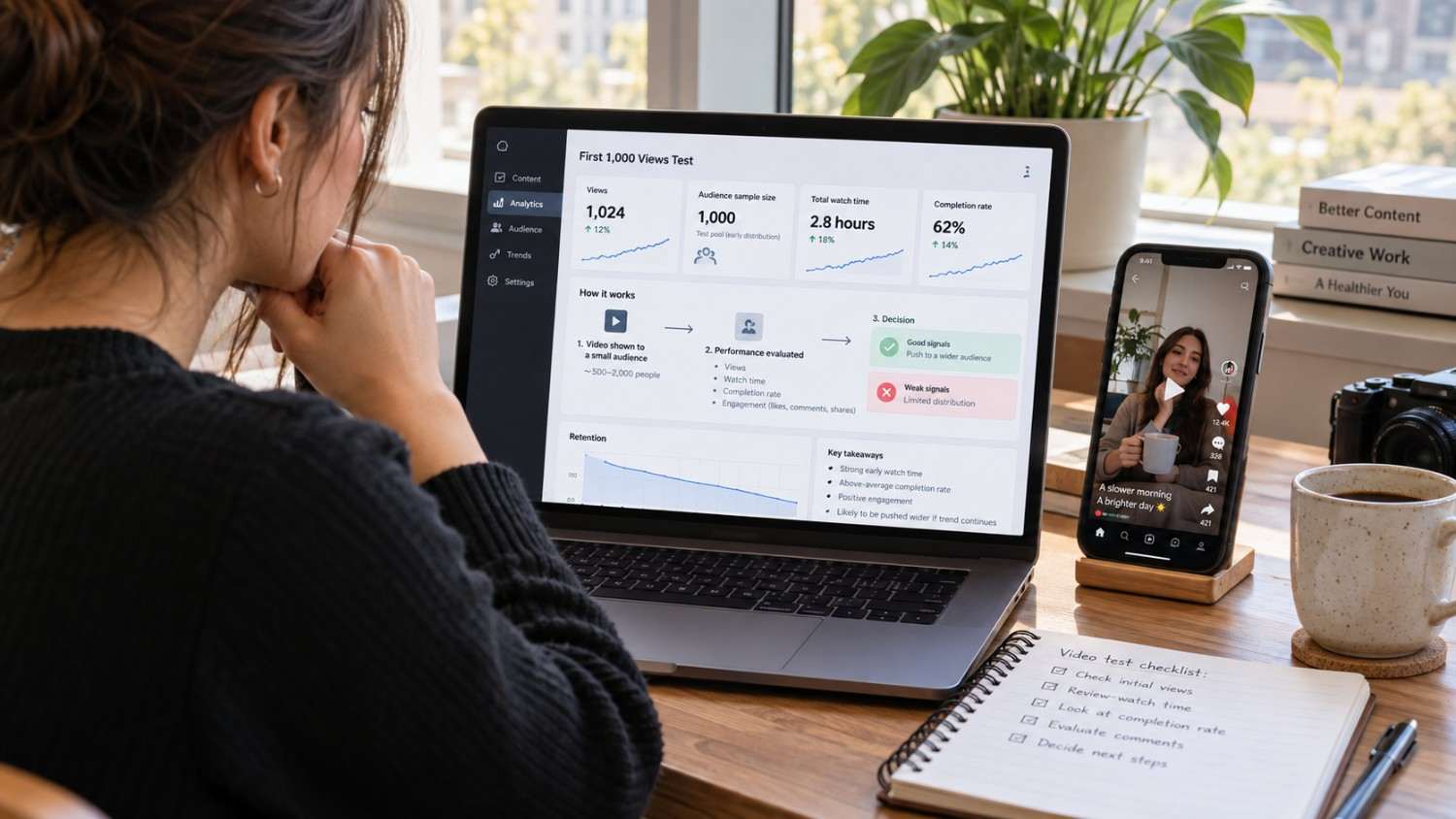
The For You Page functions as TikTok’s discovery engine, and it works in stages rather than all at once. Every new video enters what’s usually called a cold start pool, shown to somewhere between 200 and 500 random viewers first. TikTok then measures how that small group engages with the video, typically within the first 30 to 90 minutes after it’s posted. If the early numbers look strong, the video gets amplified to a wider audience. If that next group responds well too, the video keeps expanding outward, reaching larger and larger pools based on continued performance at each stage.
The pattern is consistent no matter who posted the video. Everyone gets a fair first test, and what happens after that test is almost entirely down to how people respond in those first crucial minutes.
How TikTok Tests a Video With Small Audiences First
It’s worth walking through that testing process step by step, because understanding it changes how you think about a slow first hour. Step one is the cold start pool, where your video reaches that initial small batch of random viewers. Step two is performance measurement, where TikTok tracks watch time, shares, saves, comments, and likes from that group. Step three is the amplification decision, where a strong showing in step two triggers distribution to a larger audience. Step four is gradual expansion, where the video keeps reaching bigger pools as long as performance holds up.
A video that stalls after the first pool usually isn’t being punished. It simply didn’t clear the bar in that initial test, which is a very different problem than being suppressed, and it’s a problem you can often diagnose by looking honestly at where viewers dropped off.
https://youtu.be/VgUZJo0qDRc?si=_e4XFBwIwOnnv4OW
Watch Time, Completion Rate and Rewatches
Watch time remains the single most important ranking factor, and a few specific measures feed into it. Completion rate tracks how many people watch a video all the way through, and a higher completion rate is one of the clearest quality signals TikTok has access to. Average watch time measures how long people stick around overall, and longer average watch time consistently correlates with stronger distribution. Rewatch rate tracks how often people watch the same video more than once, and rewatching is treated as a strong sign that the content earned genuine interest rather than a passive glance.
One detail worth remembering: watch time per impression now tends to carry more weight than raw view count. A 60 second video that holds 80 percent of its viewers to the end will typically outperform a 15 second video with a 95 percent completion rate, simply because it’s demonstrating more total attention. The practical takeaway hasn’t changed much over the years. Hook viewers in the first one to three seconds, hold their attention through the middle, and build in a reason someone might want to watch again.
Why Rewatches Are an Underrated Signal
Most creators optimize for the hook and the ending and forget about rewatch value entirely. A video that rewards a second watch, whether through a detail easy to miss the first time or information dense enough that one pass isn’t quite enough, tends to quietly outperform videos that are fully understood in a single viewing. It’s harder to engineer on purpose, but worth keeping in mind while editing.
How Likes, Comments, Shares and Saves Affect Reach
Not every form of engagement carries the same weight, and the gap between them has grown over the past couple of years. Shares sit at the top of the list. When someone shares a video, whether to a friend or to their own story, TikTok treats that as strong evidence the content is worth spreading further. Saves come next, since saving something signals the viewer wants to come back to it later, which the algorithm reads as reference value. Comments carry conversation value, since a video that sparks discussion is doing something a passive scroll doesn’t. Likes sit at the bottom. They’re still useful and still worth having, but they take almost no effort to give, so the system weighs them accordingly.
The reason saves and shares have become the highest weighted signals of 2026 comes down to what they represent: content people consider worth keeping or worth spreading is, almost by definition, content with staying power.
What Makes TikTok Push a Video to More People
It helps to think about amplification as a checklist the algorithm is quietly running after every test pool. A high completion rate tells it people watched through. Strong sharing tells it people wanted others to see it too. A high save count tells it the content has lasting value. Active commenting tells it the video is conversation worthy. A video that checks even two or three of those boxes convincingly in its first pool tends to keep climbing, and that’s really the entire mechanism behind organic growth on the platform.
How TikTok Uses Search Keywords and SEO
TikTok has increasingly started to behave like a search engine, and that shift is worth taking seriously if you haven’t already adjusted for it. The platform analyzes spoken words through its auto caption system, so the words you actually say out loud in a video are read and indexed. It reads text overlays on screen the same way, so keywords placed visually in a video contribute to how it’s categorized. Written captions get the same treatment, helping the system understand a video’s topic beyond what’s shown visually. Hashtags still play a role too, helping categorize content even if their influence has softened compared to a few years ago.
The term that’s become common shorthand for this shift is search value, and it’s now treated as a genuine ranking signal in its own right. Videos that directly answer a search style query, the kind of thing someone might type into TikTok’s own search bar, tend to get prioritized in ways that pure entertainment content doesn’t always benefit from.
How Hashtags and Captions Influence Discovery
Hashtags and captions work together as topic signals rather than growth hacks on their own. A reasonable approach is three to five relevant hashtags per video, mixing a broad tag like FYP with a couple that are specific to your niche. Captions do more of the heavy lifting than most creators assume, since a descriptive caption with the right keywords gives the algorithm a clearer read on what the video covers and who it should reach. Together, hashtags and captions are less about tricking the system and more about accurately describing your content so it lands in front of the right audience.
Common Search SEO Mistakes Creators Make
The most frequent mistake is treating captions as an afterthought, typing them quickly after the video has already been edited. A caption written before filming, with the actual keywords someone might search for in mind, tends to perform noticeably better. Another common miss is skipping spoken keywords entirely and relying only on text overlays. Since TikTok reads speech too, saying the topic out loud, even briefly, reinforces what the caption and hashtags are already telling the system.
Why Some TikTok Videos Get Stuck at Low Views
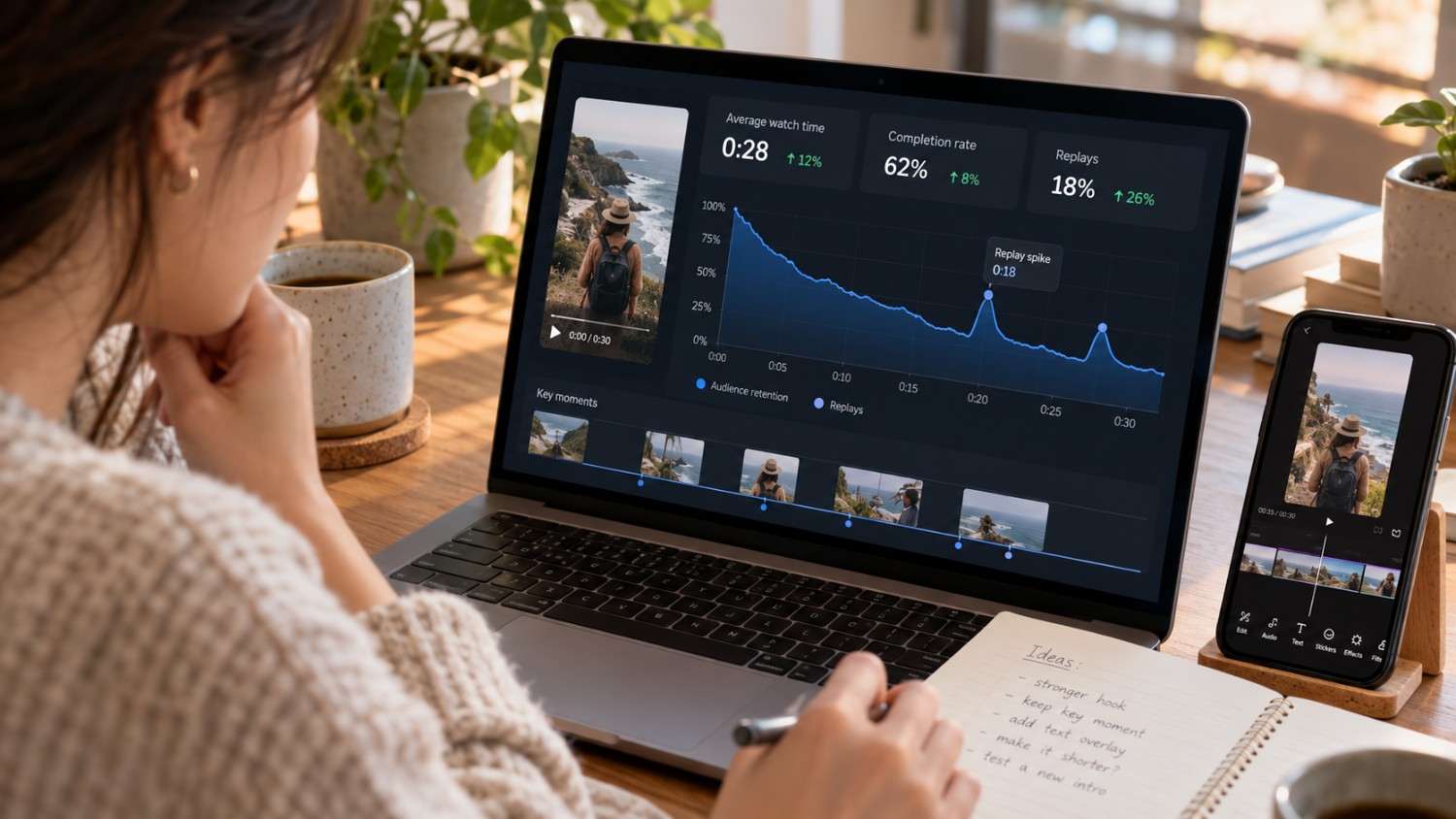
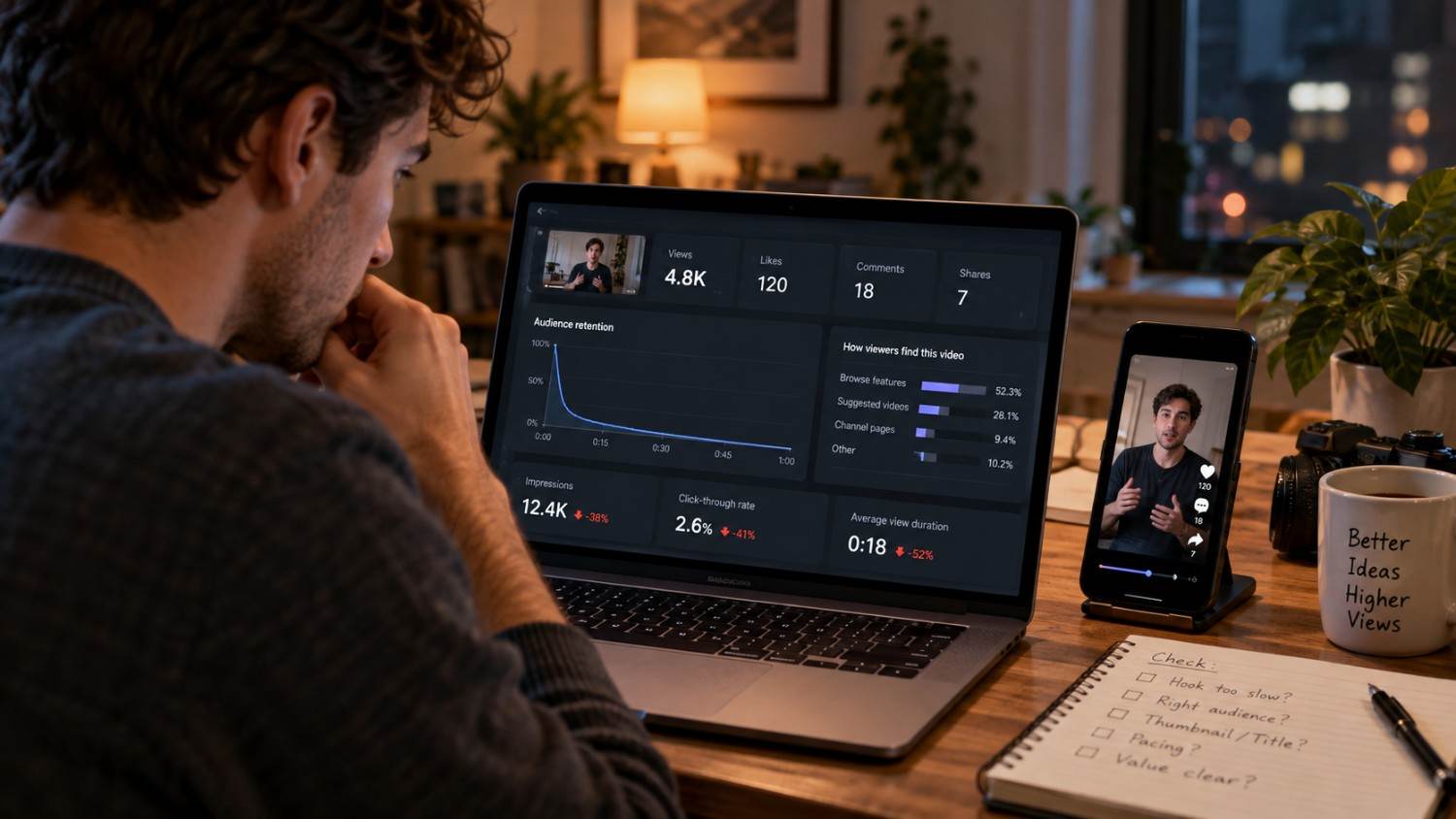
Low view counts happen to almost every creator eventually, and the causes tend to fall into a short list. A weak hook is the most common culprit. If viewers scroll away in the first one to three seconds, the algorithm reads that as disinterest and stops pushing the video further. Low completion rate does similar damage, since a video people abandon partway through signals weak content regardless of how it opens. No engagement is its own problem. If a video doesn’t earn shares, saves, or comments, there’s nothing for the algorithm to amplify on. And sometimes the issue isn’t the video at all but the audience it reached, since content that doesn’t match the interests of its initial test pool will naturally get shown to fewer people going forward.
The fix in each case traces back to the same fundamentals. Hook viewers immediately, hold their attention, and build in something worth sharing or saving.
How to Diagnose a Low View Video
Before assuming the algorithm is at fault, it’s worth checking the analytics honestly. A steep drop off in the first three seconds points to a weak hook. A gradual decline across the whole video usually means the middle section drags. A decent completion rate but low shares or saves suggests the content held attention but didn’t feel worth passing on. Each pattern points to a different fix.
How the Algorithm Treats New Accounts
New accounts genuinely do get a fair shot, and it’s one of the more reassuring parts of how TikTok is built. Every new account enters the same cold start pool as an established one, typically that same 200 to 500 viewer test group. There’s no built in advantage for accounts with a longer history or a bigger following already in place. If the content performs, the algorithm amplifies it regardless of who posted it or how many followers they currently have.
That’s the entire point worth holding onto here. A brand new account absolutely can go viral, and the deciding factor is almost always the quality and relevance of the content itself, not how long the account has existed.
Do New Accounts Actually Have an Edge
There’s a reasonable argument that new accounts sometimes benefit slightly from novelty, since the algorithm has no prior history to weigh against a fresh video and tests it purely on its own merits. Whether that’s a real advantage or just feels that way is hard to prove, but the practical lesson holds either way: consistent effort on content quality matters more than waiting to build a following first.
https://youtu.be/AGkRkNuhO_o?si=tFlzZbQX2b74jDzf
Does Posting Time Still Matter on TikTok?
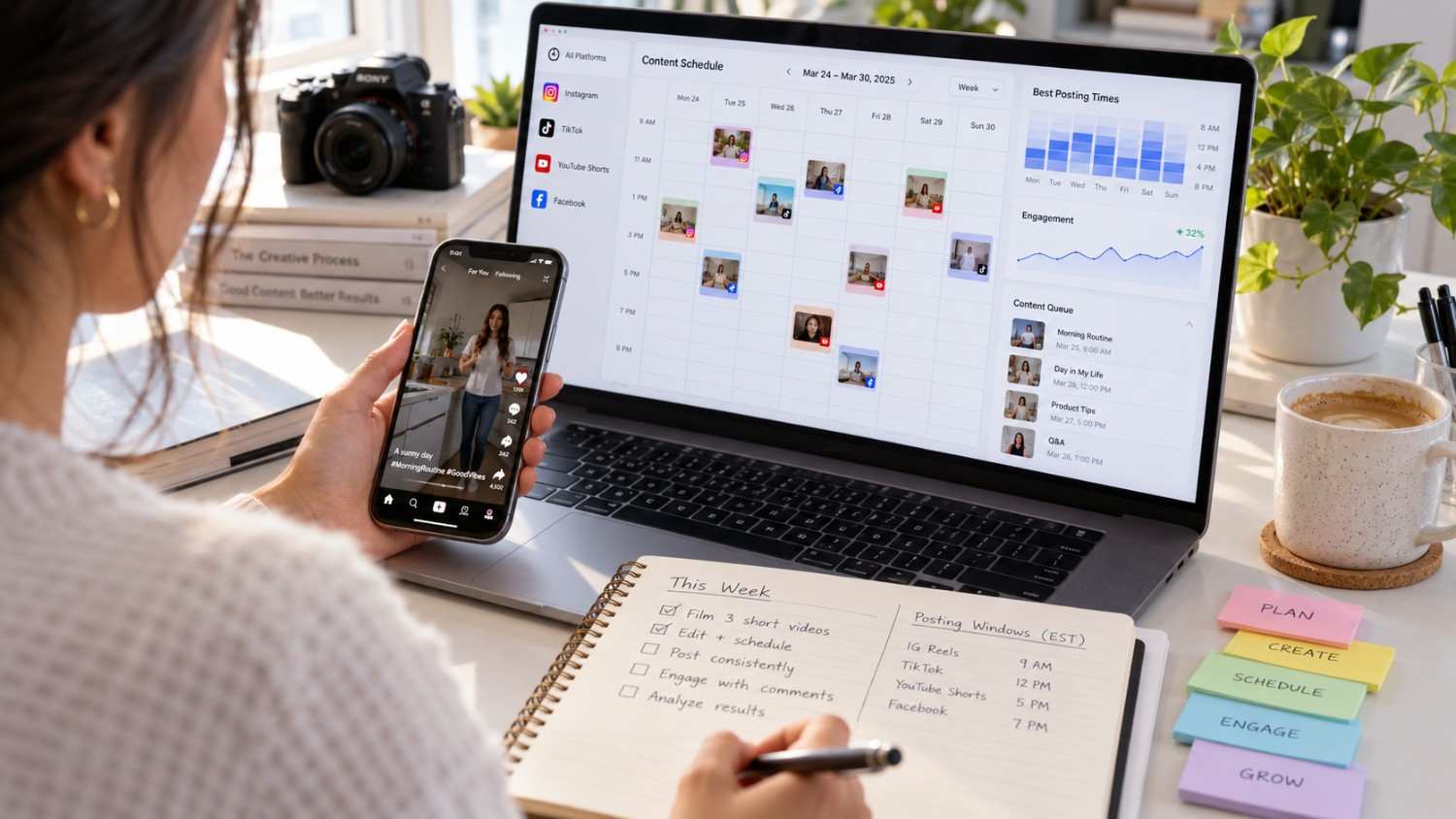
Posting time still has some influence, but it plays a smaller role than most creators assume. Commonly cited peak windows are weekdays around 7 to 9 in the morning, 12 to 2 in the afternoon, and 7 to 10 in the evening, with weekends trending a bit later, roughly 10 in the morning through noon. Those are general starting points rather than fixed rules, and checking your own TikTok Analytics for when your specific audience is actually active will usually give a more reliable answer than any generic list.
The bigger truth underneath all of this is that content quality outweighs timing by a wide margin. A genuinely strong video posted at three in the morning will still outperform a mediocre one posted during a supposed peak window. Posting time mostly affects how quickly a video gets its initial engagement, not whether it ultimately performs well over its full lifespan.
Where Social by InstantDM Fits In
Once you’ve settled on rough posting windows for your audience, actually hitting them every day without missing a slot is a separate problem, and that’s the piece a scheduler like Social by InstantDM is built to solve. It’s a planning and publishing tool, not an algorithm predictor, so it won’t tell you why a video underperformed. What it does handle is getting content out the door on time across TikTok and your other channels from one calendar, with native formatting per platform so you’re not manually reformatting captions or hashtags for each one.
A few specifics worth knowing. Its best time to post feature learns when your own audience tends to be active on each connected channel rather than relying on generic industry averages. The AI caption writer can draft or rewrite captions in your voice using your own AI key, and it can suggest hashtags based on what’s actually working on a given platform that week. For teams, there’s an approval workflow so a draft can be reviewed before it goes live, plus bulk scheduling with CSV import for queuing a batch of videos at once. None of that changes how the algorithm ranks a video, but it does remove the manual work around posting consistently, which matters given how much weight TikTok places on it.
How Trending Sounds and Audio Affect Distribution
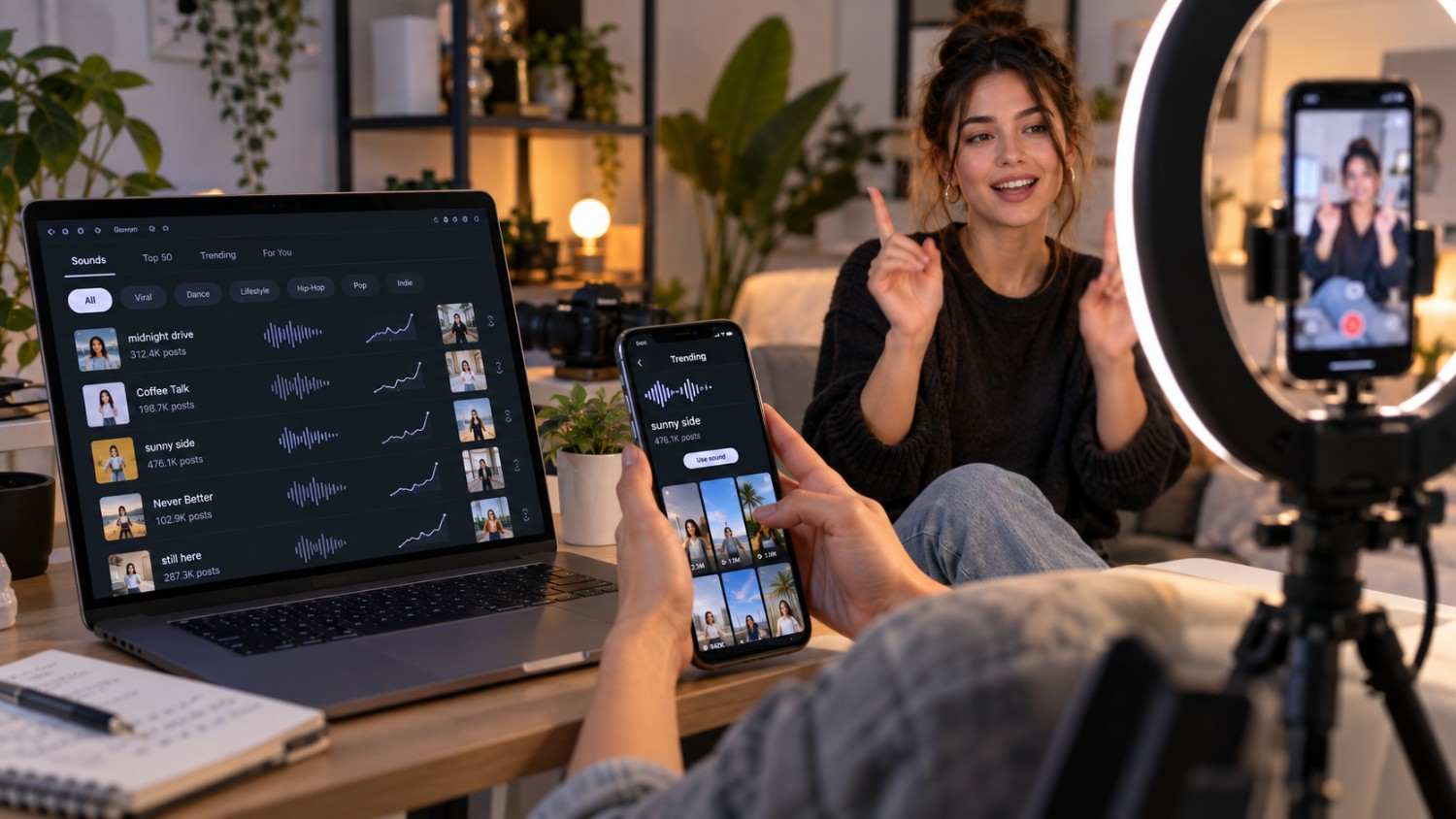
Audio still shapes distribution in a meaningful way. TikTok’s algorithm tends to favor content built around trending sounds, partly because shared audio helps connect users with similar taste even when nothing else about their viewing habits overlaps. Timing plays a real role here too. Using a trending sound within three to five days of it taking off tends to catch the algorithm while it’s still actively pushing that audio to more people, and that window tends to close faster than it used to. It’s also worth making sure the sound actually fits the content rather than being bolted on, since a mismatched trend rarely performs as well as one chosen deliberately.
The simplest way to think about trending audio is as a distribution tool rather than a shortcut. It can genuinely widen a video’s reach, but it works best layered onto content that would have stood on its own anyway.
Picking Sounds That Fit Your Content
Before using a trending sound, it’s worth watching a handful of videos that already feature it and asking what mood or pacing they share. A sound built for comedic timing will feel off underneath a serious explainer, and a slow, emotional track will clash with a fast cut tutorial. Matching tone first and chasing the trend second tends to produce far better results than grabbing whatever’s climbing the chart that day.
The Bottom Line
TikTok’s algorithm in 2026 comes down to a fairly consistent set of priorities: watch time and completion rate above everything else, shares and saves close behind, and a growing emphasis on search value through spoken words, on screen text, and captions. The For You Page remains genuinely interest-based rather than follower-based, and every video, regardless of who posted it, gets a fair first test against a small audience before the system decides whether to push it further.
None of that guarantees a viral video on command, but it does explain, with a fair amount of consistency, why some content takes off and other content quietly stalls. Hook viewers in the first few seconds, hold their attention, give people a reason to share or save what they watched, and describe your content honestly enough that the algorithm knows exactly who to show it to. Do that consistently, and the platform tends to do the rest.
Sources for This Guide:
References:
https://sproutsocial.com/insights/tiktok-algorithm/
https://blog.hootsuite.com/tiktok-algorithm/
https://www.socialrescue.com/blogs/how-the-tiktok-algorithm-works-in-2026