7 Best Hootsuite Alternatives in 2026 (After the Price Hikes)
Hootsuite killed its free plan and now starts at $99/user/month. Here are 7 honest Hootsuite alternatives for 2026, with real pricing, who each is for, and when Hootsuite is still worth it.
Hootsuite isn’t the tool people remember
For years, Hootsuite was the default answer to “what should I use to schedule posts?” It had a free plan, cheap paid tiers, and it ran everything from one dashboard. That version of Hootsuite is gone.
On 31 March 2023, Hootsuite removed its free plan and replaced it with a 30-day trial. Since then the pricing has kept climbing and the product has leaned hard toward enterprise buyers. A lot of solo creators, freelancers and small teams have been quietly priced out.
One disclosure before we go further: I build one of the tools on this list, Social by InstantDM. So read my own pick with the appropriate pinch of salt. I’ve kept the rest honest, including a section on when Hootsuite is still the better call, because a shill piece helps nobody.
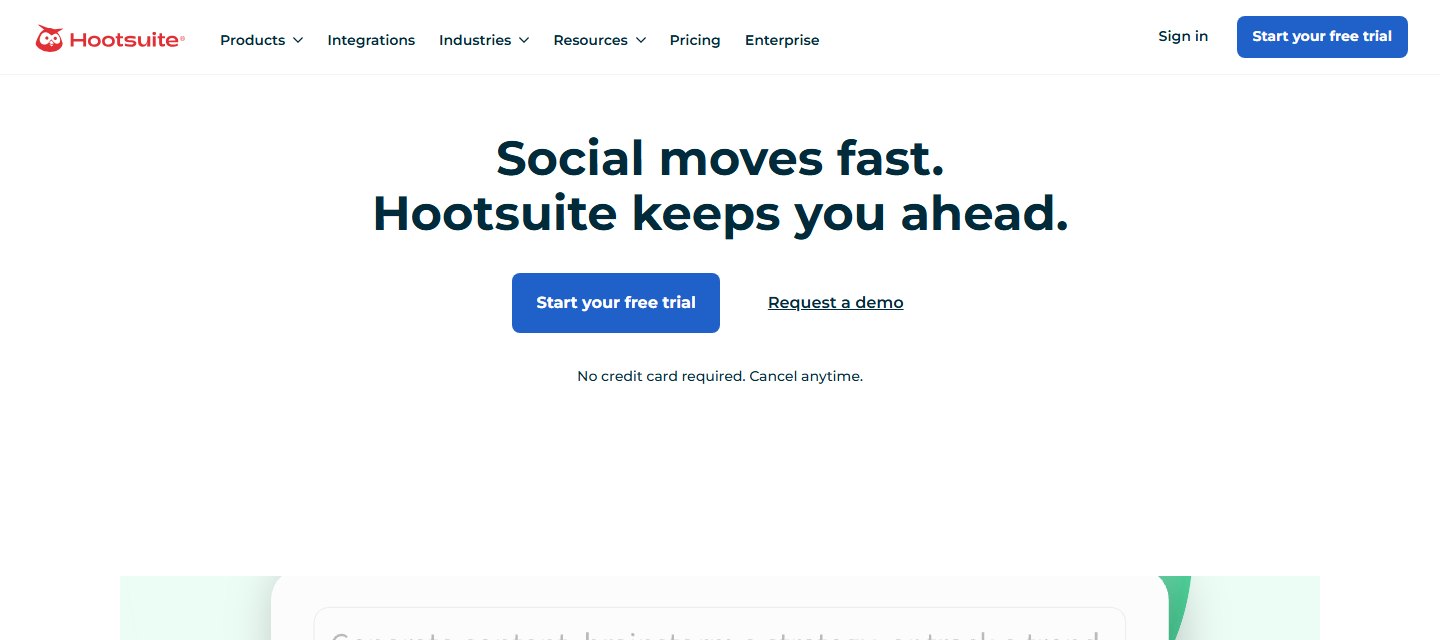 Hootsuite’s homepage today — a screenshot of hootsuite.com, captured July 2026.
What actually changed, and why your renewal stings
If you’re here because your renewal quote made you wince, you’re not imagining it.
Hootsuite’s current plans start at roughly $99 per user per month for Standard and $249 per user per month for Advanced, billed annually only. Enterprise is custom and, by most public estimates, lands somewhere around $16,000 to $18,000 a year. There’s no cheap middle tier anymore.
The bigger issue for teams is that it’s priced per user, not per account. Every person you add is another $99 to $249 a month, so an agency with a few contributors is into four figures a month before it’s done anything useful. And the pain doesn’t stop at signup. Users on Reddit and in review threads report renewal jumps of 40 to 60% on contracts signed a year earlier, which Blotato has rounded up. If you signed in early 2025, 2026 may be a surprise.
The AI story is thinner than you’d expect for a 2026 tool, too. Hootsuite’s assistant, OwlyGPT, writes captions and generates images from the Standard tier, but there’s no AI video at any tier and the fully generative chatbot is Enterprise-only.
Then there’s the dashboard. Its Streams are genuinely powerful if you’re monitoring 20 or more accounts. If you’re not, most people find the interface cluttered and dated, with a real learning curve. That shows up over and over in G2 and Capterra reviews.
None of this makes Hootsuite a bad product. It makes it an enterprise product with enterprise pricing, which is only a problem if you’re not an enterprise.
How I’d choose an alternative
Worth getting straight before you compare sticker prices: the pricing model matters more than the number. Per-user pricing (Hootsuite’s) charges you for having a team. Per-account or flat pricing doesn’t. That one difference decides most of the maths below.
After that, check the platforms you actually post to rather than the ones on the feature list, notice what’s locked behind higher tiers (often the AI and analytics you’d actually use), and be honest about whether you need enterprise social listening at all. If you don’t, a simpler tool will cost less and set up faster.
With that lens, here are the seven I’d point people to, roughly in the order I get asked about them.
The 7 best Hootsuite alternatives in 2026
1. Social by InstantDM: for cheap, multi-platform, and AI-agent-ready
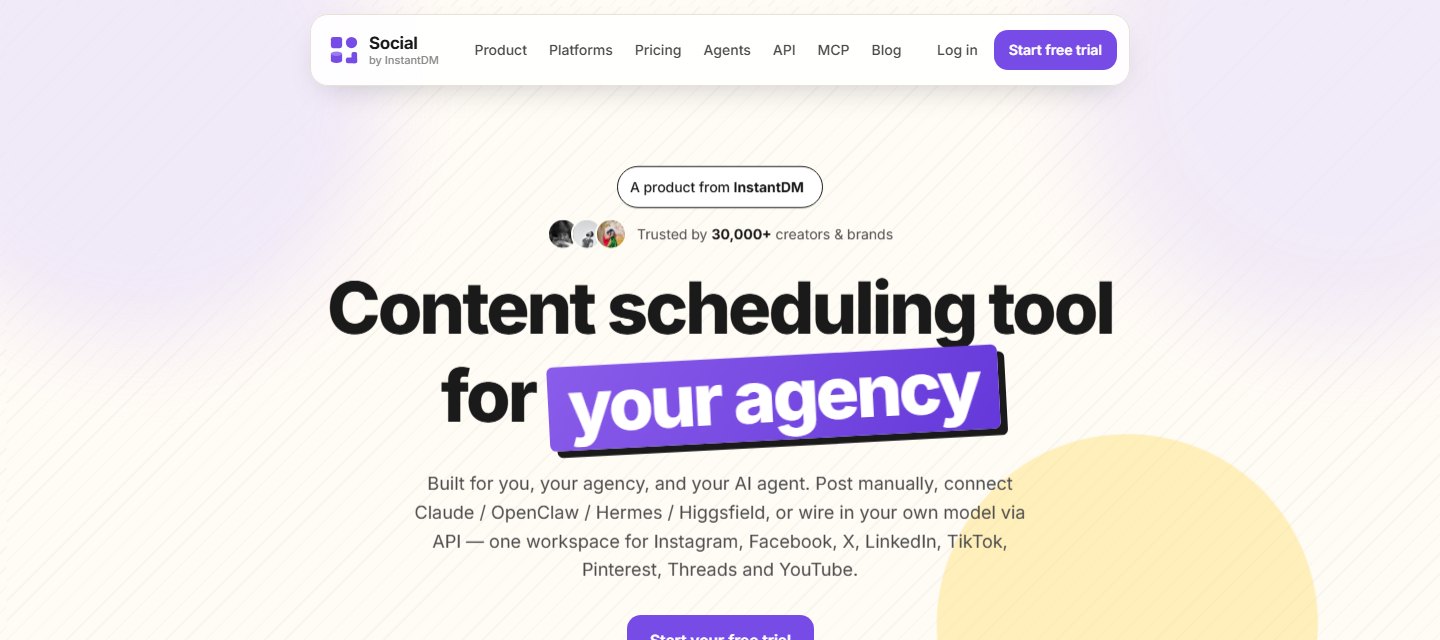
This is my tool, so weigh it accordingly. The honest case: it publishes to 8 platforms (Instagram, X, LinkedIn, TikTok, Facebook, Pinterest, Threads and YouTube, including native long-form and Shorts) from one calendar, writes AI captions tuned for each network, and prices per account rather than per seat. That’s $19/month, about $120 a year on annual billing, for up to 15 connected accounts with unlimited team members.
The part no incumbent has: a public API and a hosted MCP server on every plan, so an AI agent like Claude, ChatGPT or Grok can schedule and publish for you in plain language. Hootsuite keeps its generative chatbot on Enterprise; here it’s the default.
Where it isn’t the answer: it’s new. If you need best-in-class social listening, a decade-long track record, or heavy enterprise governance, that’s not us yet, and best-time-to-post suggestions are still on the roadmap rather than shipped. But for a small team that mainly wants to publish everywhere without paying per seat, the maths is hard to argue with.
Best for creators, freelancers and small teams who want to stop paying per user, plus anyone building with AI.
2. Buffer: for simplicity above all
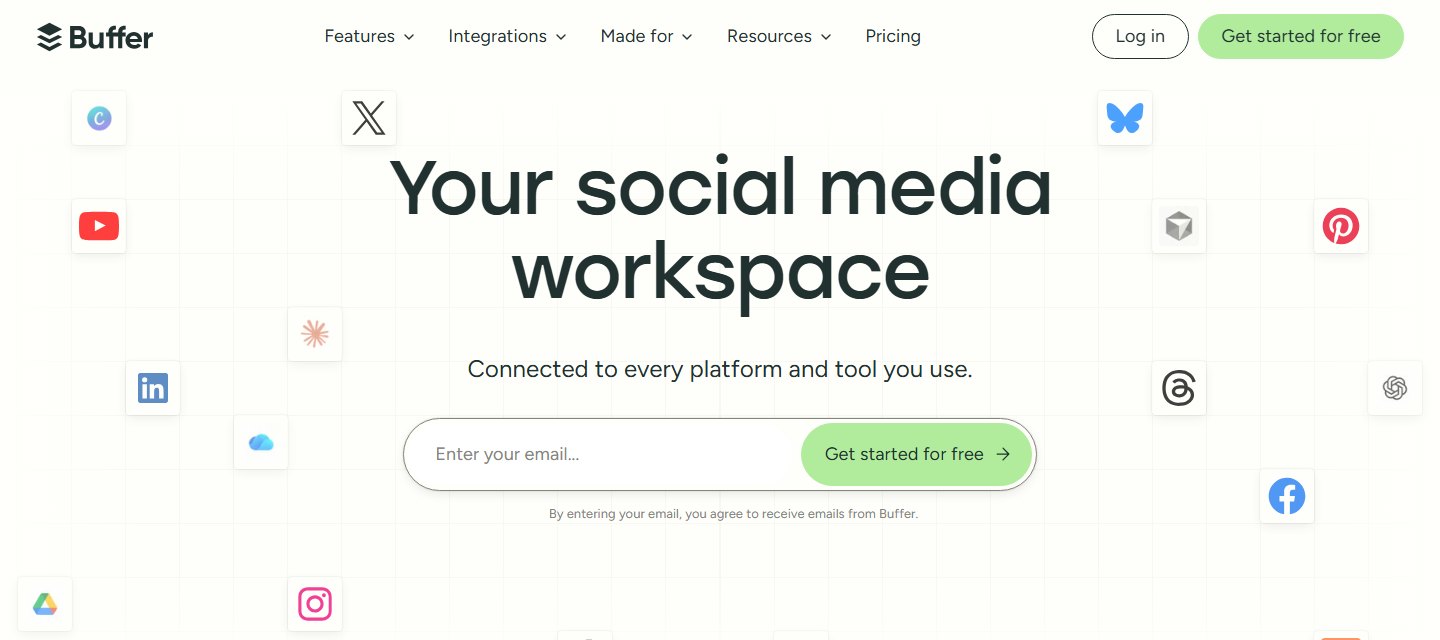
Buffer is the anti-Hootsuite. It’s clean, it schedules well, and it doesn’t try to be a marketing suite. There’s still a free plan for 3 channels, and paid plans start at $6/month per channel.
The catch is that per-channel pricing quietly stops being cheap once you’re past three or four channels, and both the analytics and the listening are light. If you want the least fussy tool that exists, though, it’s Buffer.
Best for solo creators and small businesses who want simple, not powerful.
3. Later: for Instagram and TikTok people
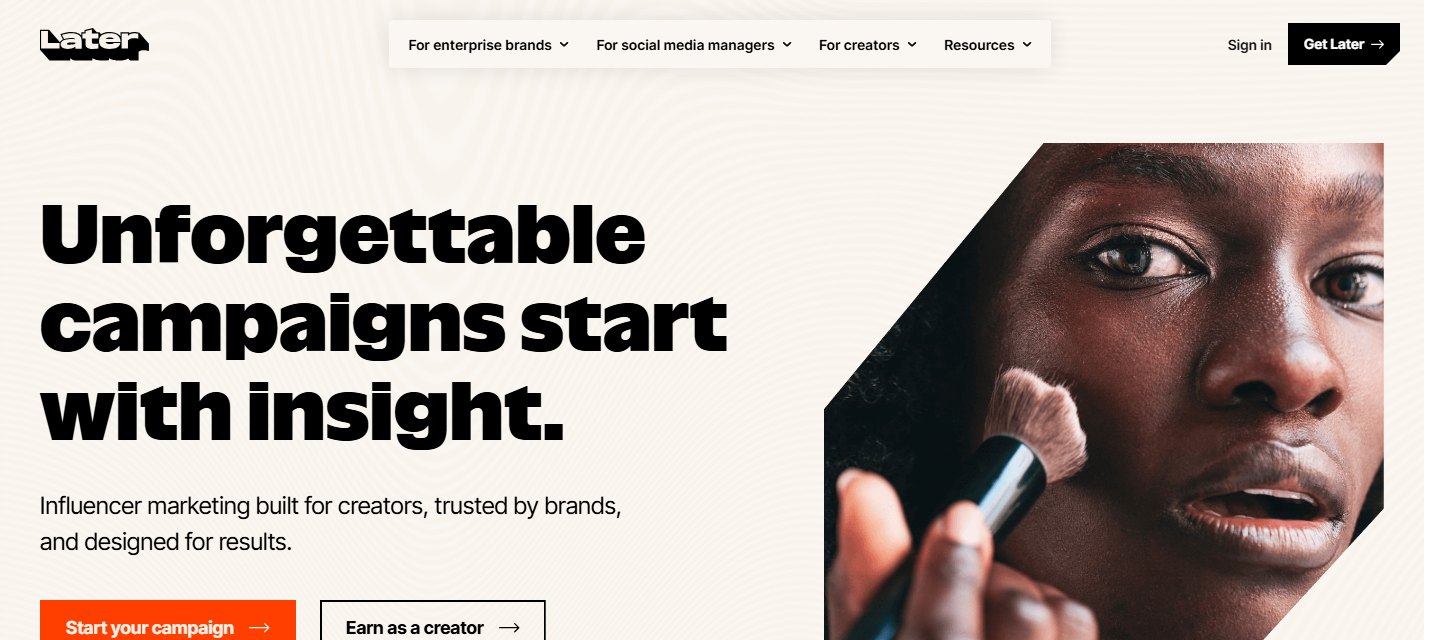
Later grew up as an Instagram scheduler and it shows. The visual calendar, drag-and-drop planning and Link in Bio are genuinely good, and its TikTok support beats Hootsuite’s. Paid plans start around $25/month.
It’s less compelling if X and LinkedIn are central to your strategy, where the features get thin.
Best for visual creators whose world is Instagram, TikTok and Pinterest.
4. Metricool: the one Reddit keeps recommending
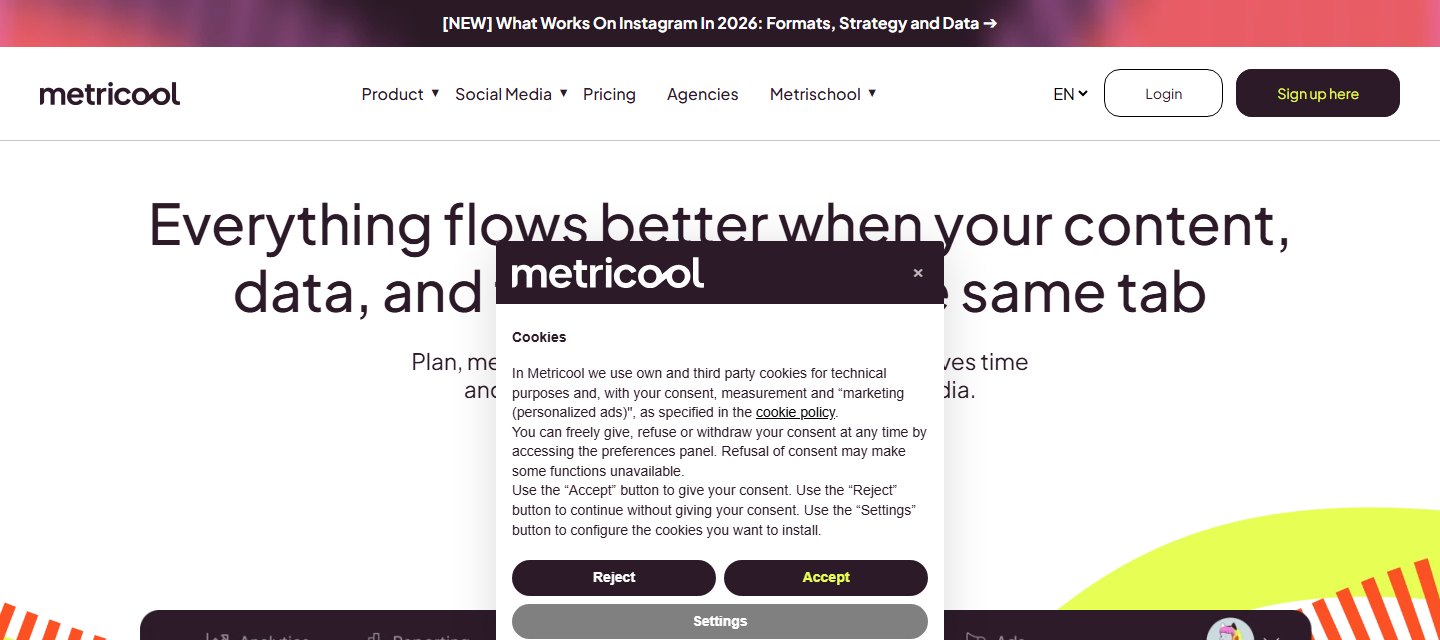
Read enough “we left Hootsuite” threads and Metricool comes up constantly, usually from people running a lot of brands. It pairs scheduling with strong analytics and competitor tracking, has a free plan, and starts around $18/month. Because it’s priced per brand, it stays affordable as you scale.
The interface feels busy at first. That’s the trade for the depth.
Best for data-minded marketers and anyone juggling several brands on a budget.
5. Publer: the quiet budget workhorse
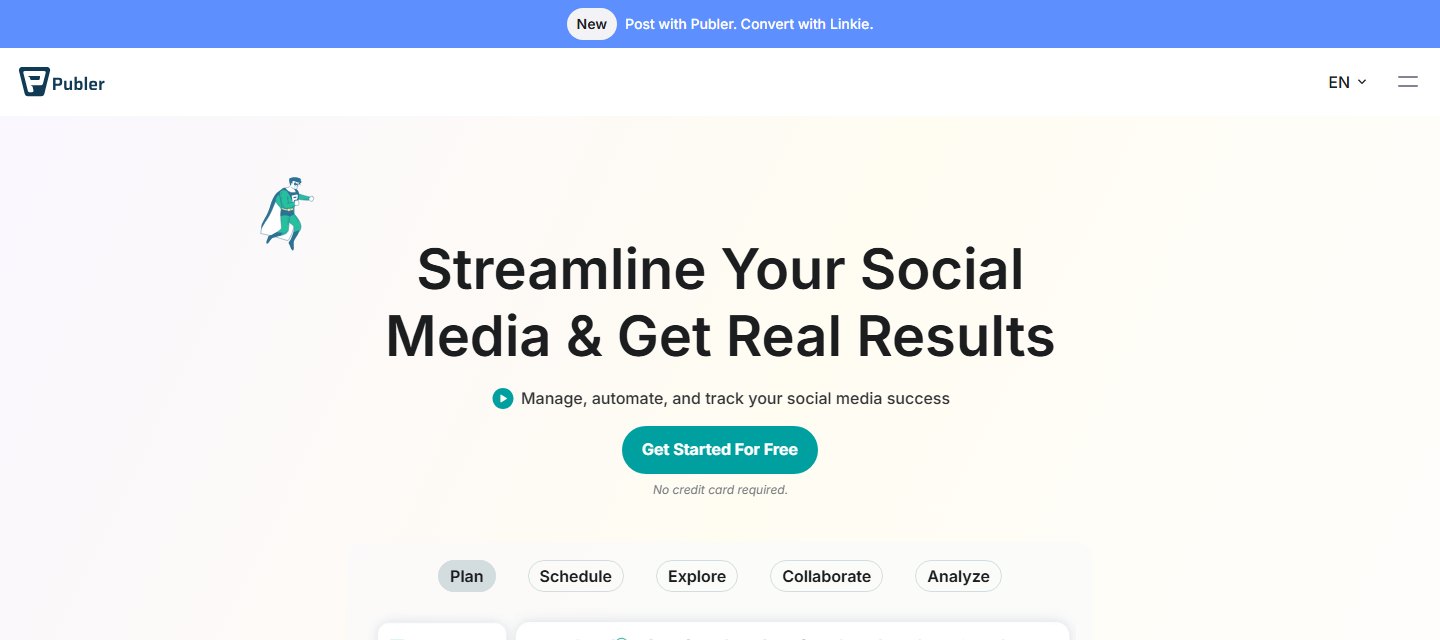
Publer doesn’t market itself loudly, but at $12/month with unlimited team members it does a lot: bulk scheduling, recycling, automation, a clean interface. Reddit tends to call it “robust for the price.”
Smaller integration library and lighter analytics than the big names, but for the money it punches above its weight.
Best for freelancers and startups who want a lot of tool for a little money.
6. SocialPilot: for client work
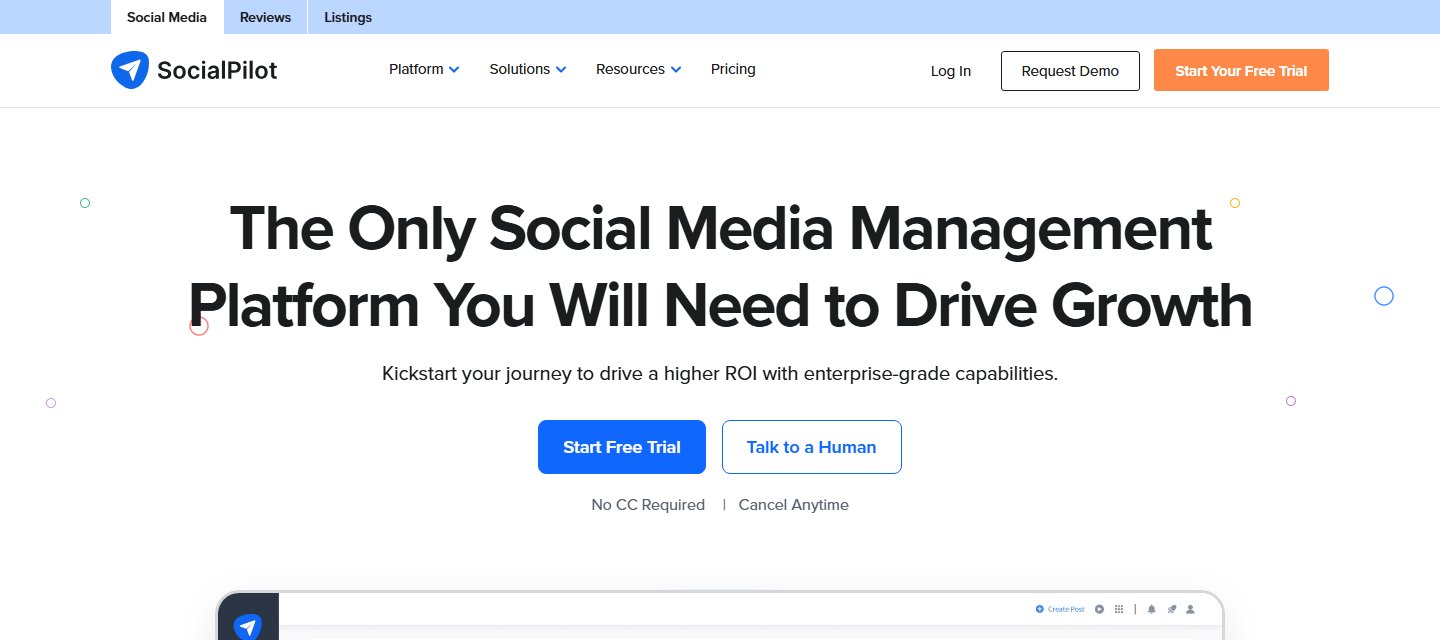
SocialPilot is built for agencies, with bulk scheduling, client management and white-label reports from around $30/month, a fraction of Hootsuite’s per-seat cost. It’s less polished than Buffer or Later, but the agency features are the whole point.
Best for freelancers and small agencies managing several clients.
7. Agorapulse: when the inbox is your bottleneck
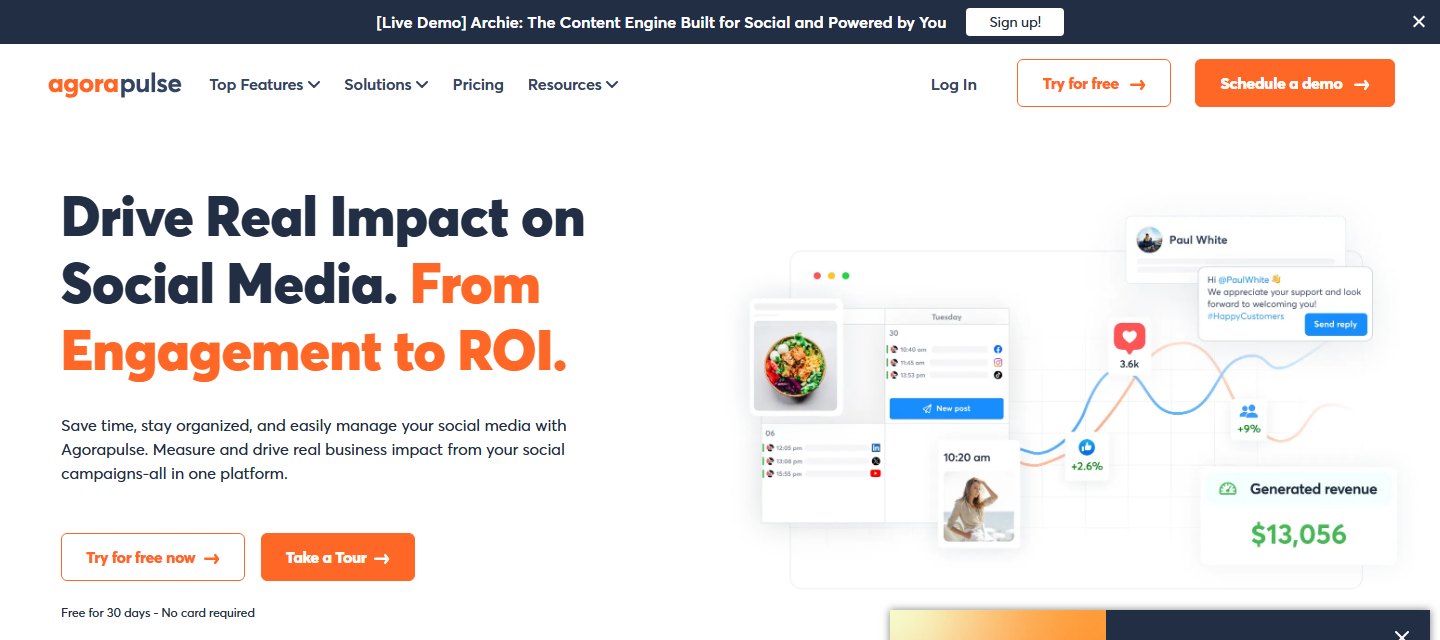
Agorapulse leads with a unified social inbox and a support reputation that’s the opposite of Hootsuite’s, where a common complaint is that support can take weeks. From about $49/month, it still sits well under Hootsuite’s per-seat cost.
Social listening is a paid add-on, so factor that in if it matters to you.
Best for teams whose main pain is managing comments and DMs across networks.
What switching actually costs over 12 months
Sticker prices are one thing. The annual bill is where the per-user model really shows up.
| Scenario | Hootsuite | Social by InstantDM | Buffer | Publer |
|---|---|---|---|---|
| Solo creator, 5 accounts | $1,188/year | $120/year | $360/year | $144/year |
| Team of 3, 10 accounts | $3,564/year | $120/year | $720/year | $144/year |
| Agency, 5 people, 20 accounts | $5,940/year | $250/year | $1,440/year | $144/year |
| Enterprise, 10 people, 50 accounts | $11,880/year | $500/year | $3,600/year | $144/year |
Hootsuite is billed per user per month (Standard about $99). Social by InstantDM is billed per account/workspace with unlimited team members (Pro covers 15 accounts, Max 20, Ultra 50). Buffer is per channel per month. Publer is a flat monthly fee. Figures as of mid-2026; check each vendor for current pricing.
The gap for a small team is the eye-opener. Moving a team of five off Hootsuite frees up roughly $5,800 a year. Over three years that’s a freelancer’s retainer, or a decent chunk of an ad budget.
Hootsuite vs Social by InstantDM, side by side
| Hootsuite | Social by InstantDM | |
|---|---|---|
| Free option | 30-day trial | 4-day trial |
| Starting price | about $99/user/month | $19/month |
| Billed | Per user | Per account/workspace |
| Team members | Charged per seat | Unlimited, every plan |
| Platforms | 8 | 8 (incl. native YouTube) |
| AI captions | OwlyGPT (Standard and up) | Yes, on every plan |
| Generative AI chatbot | Enterprise only | Not offered |
| Public API | Higher tiers | Every plan |
| MCP server (AI agents) | No | Yes |
| Social listening | Strong (a real strength) | Basic |
| Built for | Large enterprise teams | Creators, small teams, builders |
When Hootsuite is still the right choice
I’d be doing you a disservice if I pretended nobody should use Hootsuite. There are real cases where it earns its price.
If enterprise social listening is your core job, tracking brand sentiment across the internet at scale, most alternatives won’t match it. If you’re a big team that needs governance (approval chains, roles, audit logs, SSO, compliance for regulated industries), that’s enterprise territory and Hootsuite is built for it. And if your team is already trained on Hootsuite with workflows wired through it, the switching cost can outweigh the savings, so do the honest maths before you move.
For everyone else, the solo creators and small teams watching their margins, you’re likely paying enterprise prices for capacity you’ll never touch.
How to switch off Hootsuite in an afternoon
It’s less work than the renewal invoice makes it feel:
- Export your scheduled posts and note your connected accounts in Hootsuite (Settings, then Account).
- Connect those accounts to your new tool, a couple of minutes each, via the official APIs.
- Rebuild your schedule and posting times.
- Run both tools in parallel for about a week so you can confirm posts publish correctly and your team has what it needs.
- Cancel Hootsuite once you’re confident, after downloading anything you want to keep.
Most people are done within a day, and the new tool usually feels intuitive well before the trial runs out.
If the thing that pushed you here was the per-seat pricing, the fix is a per-account tool. Start a 4-day free trial of Social by InstantDM: 8 platforms, AI captions, unlimited team members, and an API plus MCP server your AI agent can actually use. $0 today, cancel anytime.
Frequently asked questions
Does Hootsuite still have a free plan?
No. Hootsuite ended its free plan on 31 March 2023 and replaced it with a 30-day trial. The cheapest paid plan today is the Standard plan at about $99 per user per month, billed annually.
What is the cheapest Hootsuite alternative?
For a single user, Buffer ($6/channel) and Publer ($12/month) are the cheapest. For teams, per-account tools win: Social by InstantDM is $19/month with unlimited team members, versus Hootsuite billing $99+ per seat.
What is the best Hootsuite alternative for a small team?
If you want to stop paying per seat, Social by InstantDM covers 8 platforms with unlimited team members from $19/month. Metricool is a strong pick if you manage many brands and want analytics; Buffer is best if you value simplicity.
Why did Hootsuite get so expensive?
Hootsuite moved upmarket toward enterprise. It removed the free plan in 2023, prices per user rather than per account, and reviewers report renewal increases of 40-60%. Its Standard plan is about $99/user/month and Advanced is about $249/user/month, annual billing only.
Can an AI agent schedule posts for me?
This is where most Hootsuite alternatives fall short. Social by InstantDM ships a public API and a hosted MCP server on every plan, so tools like Claude, ChatGPT or Grok can schedule and publish for you. Hootsuite's generative AI chatbot is limited to its Enterprise tier.
Is it hard to move off Hootsuite?
No. Export your scheduled posts, connect your accounts to the new tool (a few minutes each), rebuild your schedule, and run both in parallel for a week before you cancel. Most people finish the switch in an afternoon.